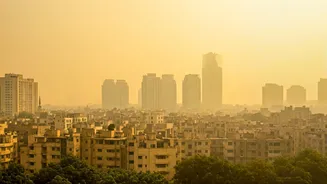

AQI at Extreme Levels
The air quality in Delhi has deteriorated significantly, with the Air Quality Index (AQI) hitting a worrying 498. This measurement falls into the 'severe'
category, signifying hazardous conditions for the residents. This escalation in pollution levels has become a major concern, as it poses a significant risk to public health. The AQI's severity necessitates immediate action from authorities to control the situation and to mitigate its adverse effects on the city's inhabitants. Various environmental factors, combined with seasonal changes, have contributed to this concerning surge in pollution, creating challenges for both short-term and long-term mitigation strategies in the capital.
GRAP-IV Restrictions Activate
In response to the extremely poor air quality, the authorities have enforced GRAP-IV restrictions. These measures are designed to curb emissions and improve air quality. The government has already put into effect numerous restrictions, which include a ban on certain types of vehicles, the implementation of 50% Work From Home (WFH) for government employees, and other strategic initiatives. The regulations are designed to quickly address the spike in pollution and to safeguard the well-being of the population. The full scope of the restrictions and their impact on the city’s day-to-day operations are being closely watched.
No PUC, No Fuel Rule
As part of the measures to curb pollution, the 'No PUC, No Fuel' rule has been enacted today. This rule mandates that vehicles must possess a valid Pollution Under Control (PUC) certificate to be eligible to refuel at petrol pumps. This step is intended to remove vehicles that are not in compliance with emission standards from the roads. This measure seeks to encourage vehicle owners to get their vehicles inspected and to ensure they meet the environmental guidelines. The implementation of this rule represents a significant enforcement step, aimed at lowering pollution levels by limiting the use of polluting vehicles.
WFH and Vehicle Bans
A 50% Work From Home (WFH) policy has been put in place for government employees as part of the strategy to reduce pollution. This shift aims at cutting down vehicular traffic in the city, which is a major contributor to air pollution. Simultaneously, new vehicle bans have been introduced to further limit emissions, with specific details pertaining to the type of vehicles affected and duration of the bans. The combined effect of these steps will aim to minimize the number of vehicles on the road and to lower the overall emission levels, thereby contributing to the betterment of Delhi’s air quality. The city is adopting multiple measures to address the environmental crisis.
Relief and Future Plans
While strict measures have been implemented to alleviate the situation, there are discussions on potential relief measures. The government is exploring options that will assist in mitigating the current pollution levels and to provide some reprieve from the adverse conditions. These future plans include long-term strategies, such as improvements to public transportation, the promotion of cleaner fuels, and measures targeting industrial emissions. There is a need for a sustained effort that addresses the various sources of pollution. Such efforts will be essential in improving the long-term air quality and making Delhi a healthier place to live. The effectiveness of the initiatives and their impact on the city’s pollution are being actively monitored.