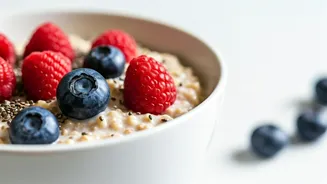

Oats' Weight-Loss Power
Overnight oats have gained traction in the weight loss community, and for good reason. Primarily, oats are rich in soluble fiber, especially beta-glucan.
This fiber dissolves in water, forming a gel-like substance that slows down digestion. This slow digestion keeps you feeling fuller for longer, which can naturally reduce calorie intake throughout the day. Furthermore, the slow release of sugar from oats prevents the blood sugar spikes and crashes often associated with processed breakfast cereals. This stable blood sugar level reduces the cravings for unhealthy snacks and ultimately supports weight management. Including oats in the breakfast also helps improve your gut health.
Nutritional Highlights
The nutritional profile of overnight oats is a key factor in their weight-loss benefits. Oats are a good source of complex carbohydrates, providing sustained energy throughout the morning. They also contain essential vitamins and minerals, including magnesium, iron, and zinc, which are crucial for various bodily functions. The fiber content not only aids in weight loss but also contributes to improved cholesterol levels and heart health. Moreover, oats are relatively low in calories and can be customized with various healthy toppings like fruits, nuts, and seeds, which further enhance their nutritional value. These additions also help in boosting the fiber and protein content, making the breakfast even more fulfilling.
Breakfast Preparation Guide
Preparing overnight oats is a simple process, making it an accessible option for those with busy lifestyles. The basic recipe involves combining rolled oats with milk (dairy or non-dairy), and allowing it to soak overnight in the refrigerator. This soaking process softens the oats, creating a creamy texture. You can customize the oats with different flavors, such as adding berries for antioxidants or chia seeds for added fiber and omega-3 fatty acids. Protein powder or Greek yogurt can also be added for an extra protein boost, further supporting satiety and muscle health. The ease of preparation makes it a convenient and healthy choice for breakfast.
Gut Health Connection
The fiber content in overnight oats plays a crucial role in promoting gut health, which in turn supports weight loss. Fiber acts as a prebiotic, feeding the beneficial bacteria in the gut. A healthy gut microbiome is linked to improved digestion, reduced inflammation, and better nutrient absorption. When the gut is in good condition, it can efficiently extract nutrients from food, reducing cravings. Furthermore, a balanced gut flora can influence metabolism and energy expenditure, which can directly affect weight management. Regular consumption of overnight oats can contribute to a healthier gut, thus supporting weight loss and overall wellness.
Customization & Variety
One of the major advantages of overnight oats is their versatility. You can personalize them to suit your taste preferences and dietary needs. For example, add fruits like bananas, berries, or apples for natural sweetness and vitamins. Nuts and seeds (such as almonds, flax seeds, or pumpkin seeds) offer healthy fats and added protein. Spices like cinnamon or nutmeg can enhance the flavor and provide additional health benefits. For those who want more protein, adding Greek yogurt or protein powder is an excellent option. This flexibility ensures that you won't get bored with your breakfast, keeping you on track with your weight loss goals.
Doctor's Advice and Tips
To maximize the weight-loss benefits of overnight oats, consider the doctor's perspective. It's recommended to choose plain, rolled oats over instant or flavored varieties, which may contain added sugars and additives. Keep the portion sizes in check; a half-cup of dry oats is a good starting point. Be mindful of the toppings you add; prioritize nutrient-dense options like fruits, nuts, and seeds over sugary additions. Also, it’s advised to combine your overnight oats with other healthy eating habits and regular physical activity for the best results. Moreover, consulting a healthcare professional or a registered dietitian is recommended for personalized dietary advice.