







Nilles' Visionary Idea
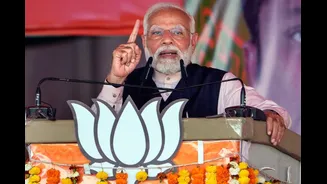
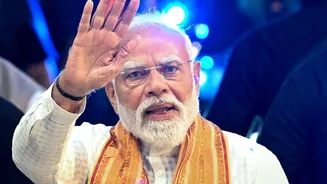
While the recent surge in remote work, or Work From Home (WFH), gained traction during the Covid-19 pandemic and has been endorsed by Prime Minister Narendra
Modi as a strategy for economic resilience amidst global uncertainties and fuel shortages, its foundational concept was laid much earlier. The actual architect of this revolution was Jack Nilles, a former NASA consultant, who conceptualized teleworking over 50 years ago. His inspiration stemmed from a query by an urban planner: given humanity's capability to land on the moon, why couldn't a solution be found for pervasive traffic congestion? This sparked Nilles' contemplation on leveraging technology to reduce the necessity of physical travel, a radical idea in the early 1970s when high-speed internet and digital communication tools were non-existent. He termed his theory the 'telecommunications-transportation tradeoff,' aiming not just for employee flexibility but also for significant environmental advantages by diminishing daily commutes.
The 1973 Productivity Test
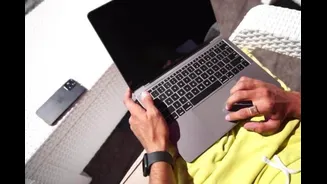
In 1973, Jack Nilles spearheaded a pioneering trial with a national insurance company, demonstrating the viability of remote work even with the technological limitations of the era. This experiment involved establishing 'local centers' equipped with minicomputers, enabling employees to work remotely. The outcomes were remarkably positive and compelling. Within a few months, the company witnessed a complete drop in employee turnover, with rates reaching zero. Furthermore, productivity saw a substantial increase of approximately 15%. The projected financial benefits for the company were estimated to be between $3 to $4 million annually. Despite these impressive results, Nilles encountered significant opposition. Corporate boards were apprehensive about supervising employees they couldn't physically observe, while labor unions expressed concerns about their ability to organize a dispersed workforce. This resistance highlighted a pervasive psychological barrier, even when the technical and economic advantages were evident.
Economic and Environmental Impact
The benefits championed by Jack Nilles resonate powerfully with contemporary economic and environmental goals, particularly in India. Prime Minister Modi's advocacy for remote work highlights its potential as an 'economic multiplier,' capable of conserving foreign exchange by reducing fuel imports and stimulating local economies. This aligns directly with Nilles' initial arguments that companies could profit by recognizing remote workers' higher productivity, easier recruitment, and reduced operational costs. Nilles consistently identified the primary obstacle to widespread telework adoption as psychological rather than technical. He observed that managers often struggled with the concept of supervising individuals they couldn't see, a challenge he noted as a universal phenomenon across various organizational structures. His foundational work laid the groundwork for understanding remote work not just as a convenience, but as a strategic tool for both business efficiency and broader societal advantages.
The Pandemic's Catalyst
Jack Nilles views the COVID-19 pandemic as the pivotal 'magic event' that compelled the global adoption of telecommuting, transforming his long-held vision into a widespread reality. He described this period as an overnight conversion, creating a world populated by 'instant telecommuters.' While initially concerned about the potential for systemic collapse, the technological infrastructure of 2020 proved robust enough to support the demands of a global workforce working remotely. However, Nilles cautions against the prevalent trend of 'Return to Office' mandates, which he considers a regression. His extensive studies consistently indicated that even a single day of remote work per week could elevate productivity by a significant margin, ranging from 10% to 20%. This underscores the enduring value and effectiveness of flexible work arrangements, a principle Nilles championed decades prior.