
An Announcement of Magnitude
The week began with a momentous declaration from Washington suggesting a breakthrough in trade relations between India and the United States, two economic
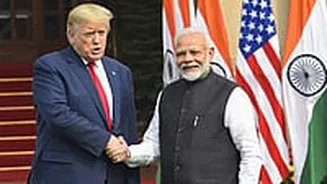
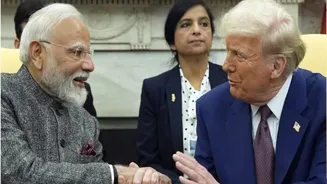
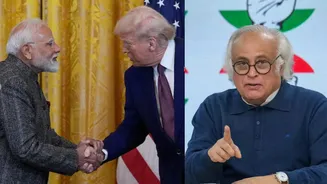
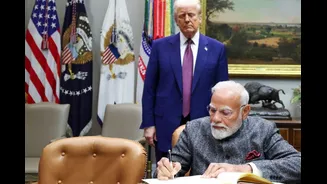
giants whose combined output approaches a substantial $33 trillion. President Donald Trump shared on Truth Social that a trade agreement had been finalized, aimed at reducing commercial barriers. This pronouncement, following a reported phone conversation with Prime Minister Narendra Modi, was framed as a significant achievement. Trump stated that the US would slash tariffs on Indian goods from a considerable 50 percent down to 18 percent. Additionally, he claimed India would cease its purchases of Russian oil, instead opting to increase its procurement from American suppliers. This development arrived after a protracted period of strained trade dynamics, marked by increasing tariffs and stalled negotiations, positioning the deal as a potential reset for bilateral ties. A day after Trump's announcement, India's Minister of Commerce and Industry, Piyush Goyal, indicated that a formal agreement would soon be signed, with a joint statement to follow once all negotiations were definitively concluded. However, no specific details, written text, or timelines were provided, creating a notable discrepancy between public claims and verifiable facts.
Conflicting Narratives Emerge
The narrative from Washington painted an expansive picture of the trade accord. President Trump asserted that India had committed to a complete cessation of Russian crude oil imports, pledging instead to source energy from the United States and potentially Venezuela. Furthermore, he declared that India would eliminate all tariffs and non-tariff barriers on American products, granting unrestricted, duty-free access across various sectors. Adding to this ambitious outlook, the US President claimed India would procure over $500 billion worth of American products, encompassing energy, technology, agriculture, and coal, among other industries. In stark contrast, the communication from New Delhi adopted a much more reserved tone. Prime Minister Modi acknowledged the mutual understanding, specifically mentioning that tariffs on Indian-made goods would be set at 18 percent. However, his public statement on X notably omitted any references to a comprehensive trade deal, the cessation of Russian oil purchases, zero tariffs for US goods, or substantial procurement commitments. The Indian Prime Minister's focus remained on fostering goodwill, highlighting leadership, and promoting broader global stability. This significant divergence in the details and emphasis between the two sides has become a central aspect of the ongoing story.
Economic Realities Questioned
Economists and trade observers have highlighted the absence of any signed, ratified, or publicly accessible documentation for scrutiny. Currently, only a pair of political statements exist, and they do not entirely align. This ambiguity makes it challenging to ascertain whether a genuine negotiated agreement has been reached or if the announcement is primarily a political maneuver. The reported figures themselves have raised considerable eyebrows. Bilateral trade between India and the United States has been on an upward trajectory, reaching approximately $129 billion last year, a figure slightly surpassing India's trade volume with China. India's exports to the US last year amounted to roughly $87 billion, primarily consisting of pharmaceuticals, electrical equipment, and precious stones. Conversely, US exports to India were valued at about $41 billion, predominantly comprising oil, fuel, gemstones, and industrial machinery. When viewed against this backdrop, a commitment to purchase over $500 billion in American goods represents a monumental leap, exceeding current trade levels by more than elevenfold. This proposed volume is nearly equivalent to 85 percent of India's entire government expenditure as outlined in its latest budget. Such a dramatic increase would necessitate a significant shift in India's import patterns from abroad. Analysts suggest that the sheer scale of this commitment makes it difficult to reconcile with prevailing economic realities and existing trade capacities.
Tariff Math and Agriculture
The proposed tariff structure has also ignited considerable debate and raised pertinent questions. The prospect of an 18 percent duty on Indian goods entering the United States, coupled with zero duty on goods imported into India from the US, suggests an asymmetrical arrangement. However, it remains unclear whether this specific arrangement has been definitively agreed upon, as New Delhi has not officially confirmed it. Agriculture remains a focal point of concern. For years, it has been the most sensitive and politically charged issue in India's trade discussions with the United States. Washington has consistently sought greater access to India's vast food market, including for genetically modified crops. India, on the other hand, has resisted such demands to safeguard its farmers' livelihoods and ensure national food security. With nearly half of India's population relying on agriculture for income, farm policy has historically been a catalyst for some of the country's largest protests, compelling the government to repeal previously introduced agricultural laws. The recent memory of these widespread demonstrations is still vivid. Against this sensitive context, statements from the US indicating expanded access for American agricultural products into India have generated apprehension. US officials have spoken about capitalizing on India's growing market to boost farm exports and reduce America's agricultural trade deficit with New Delhi. Indian officials have remained publicly silent on these specific claims. Reports from various sources suggest that India might have agreed to increase its imports in sectors such as telecommunications and pharmaceuticals. However, the inclusion of agriculture in this supposed package remains an open question.
Unanswered Policy Questions
Beyond the agricultural sector, several other critical questions remain unanswered, casting a shadow of uncertainty over the announced trade understanding. It is presently unclear whether this announcement constitutes part of a formal, comprehensive Free Trade Agreement. India recently finalized a detailed trade agreement with the European Union, which clearly delineated rules concerning investment, industry standards, and market access. In the case of the US announcement, no such granular details have been shared. Numerous policy areas remain opaque. There is a conspicuous absence of information regarding potential changes to India's patent laws, which could significantly impact the pricing of essential medicines. Furthermore, environmental and labor regulations that are typically integrated into trade agreements have not been elucidated. It is also not publicly known whether India's proposed digital services tax will be applicable to major US technology corporations under the terms of this arrangement. This lack of clarity creates significant uncertainty for businesses and policymakers alike, hindering informed strategic planning and investment decisions.
Domestic and International Reactions
Within India, the political response to the trade announcement has been notably divided. Among government circles, the prevailing mood has been one of celebration. Senior ministers have characterized the development as both historic and transformative, projecting it as a harbinger of new opportunities, job creation, and a significant boost to long-term economic objectives. Assurances have been offered that sensitive sectors like agriculture and dairy will be adequately protected, though the specific mechanisms for this protection have not been detailed. In contrast, the opposition has adopted a far more critical and confrontational stance. Opposition leaders have strongly demanded complete transparency regarding the agreement's terms and have accused the government of potentially compromising national interests without adequate parliamentary debate. The perceived lack of transparency has emerged as a key rallying point for critics, who argue that such significant claims necessitate thorough public scrutiny. Internationally, the announcement is being interpreted as a signal of thawing relations after a period of considerable tension. Previous frictions concerning visas, immigration policies, Russian oil purchases, and protracted negotiations had cooled bilateral ties over the preceding year. The recent declaration is seen as an effort to recalibrate the tone of the relationship. Strategic analysts suggest that both leaders have compelling reasons to project a sense of success. For Washington, the announcement serves as evidence of assertive trade policies yielding positive outcomes, which plays well domestically. For New Delhi, it presents an opportunity to demonstrate resilience under pressure and reinforce its relevance in an evolving global landscape. Despite these motivations, experts emphasize that true trust will ultimately depend on the substance of the final, signed agreement. India's deeply entrenched energy ties with Russia are unlikely to be severed rapidly. Lingering trade disputes will require time and effort to resolve, and rebuilding trust is an inherently gradual process.