





US Stance on Deal
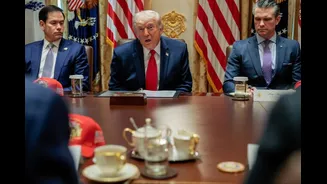
President Donald Trump has signaled a departure from immediate demands for a full nuclear concession from Iran, suggesting that negotiators should not
rush into a comprehensive agreement at this juncture. This shift in tone emerges as both Tehran and Washington have previously hinted at forward movement toward resolving the protracted conflict. Trump's public statements have emphasized that any accord reached will be robust and well-defined, countering criticism from those he deems uninformed. He also contrasted his approach with previous administrations, asserting his commitment to avoiding unfavorable pacts. The ongoing trade of statements underscores the delicate and evolving nature of the diplomatic landscape surrounding Iran's nuclear program and regional stability.
Conditions for Talks
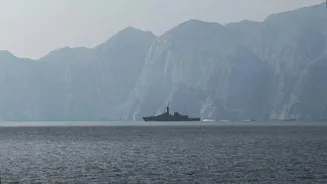
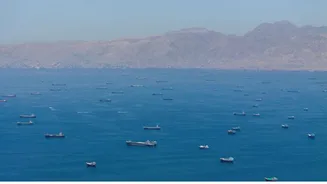
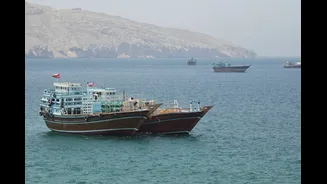
Secretary of State Marco Rubio has articulated the United States' preparedness for substantial discussions concerning Iran's nuclear capabilities, but this openness is explicitly tied to Iran's immediate reopening of the Strait of Hormuz. This suggests a potential strategy of pursuing an interim agreement that prioritizes regional maritime security before fully addressing Iran's nuclear ambitions. Rubio clarified that such intricate matters as Iran's uranium enrichment cannot be resolved instantaneously, but stressed the necessity of prompt action on the Strait. He indicated that once the shipping lanes are clear, formal talks would commence under predefined parameters, focusing on enrichment levels and Iran's commitment to nuclear non-proliferation. The timeframe for resolving these technical issues is acknowledged as potentially lengthy, though not indefinite.
Phased Approach & Timelines
The US strategy appears to lean towards a phased resolution, where an interim accord could precede a definitive nuclear agreement. This approach would involve Iran immediately unblocking the Strait of Hormuz, paving the way for more serious, albeit staged, negotiations on its nuclear program. Secretary Rubio indicated that the US is prepared to wait for a period of approximately 60 days for tangible progress in these discussions. Should the negotiations fail to yield the desired outcomes within this timeframe, President Trump retains the option to revert to more assertive measures. This dual-track strategy allows for diplomatic engagement while maintaining pressure, ensuring that the ultimate objective of preventing Iran from acquiring nuclear weapons remains paramount.
Iranian Perspective
Iran has echoed the sentiment of being open to discussions, with President Masoud Pezeshkian assuring the international community of Tehran's non-pursuit of nuclear weapons. However, the specifics of how this assurance would be formally incorporated into any agreement remain subject to clarification. Reports from Iranian news agencies suggest that key aspects of a potential deal, including the unfreezing of Iranian assets, are still pending resolution. While an agreement has been drafted, discussions surrounding Iran's controversial nuclear program, particularly its uranium enrichment activities, are slated to be postponed for 60 days following the deal's finalization. Furthermore, there are indications that sanctions on Iran's oil, gas, and petrochemical sectors could be temporarily suspended during the negotiation period, allowing Iran to resume its product sales.
Regional Diplomacy
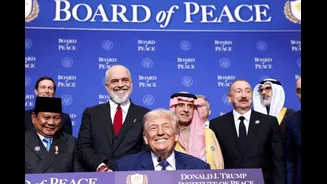
The diplomatic efforts surrounding this standoff have garnered significant regional attention. Leaders from Saudi Arabia, the United Arab Emirates, Qatar, Egypt, Jordan, and Bahrain, alongside representatives from Turkey and Pakistan, engaged in a videoconference with President Trump to deliberate on the ongoing negotiations. Pakistan, having previously facilitated direct talks between US and Iranian delegations in April, has expressed its hope to host another round of discussions in the near future. Prime Minister Shehbaz Sharif highlighted that the participation of Pakistan's Army Chief, Asim Munir, in the call provided a valuable opportunity to advance the peace initiatives aimed at establishing lasting stability in the region.