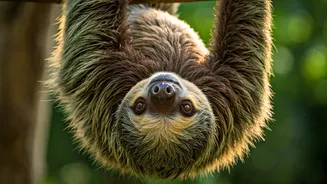

Sloth: The Ultimate Snoozer
Sloths are renowned for their slow pace and are well-known for spending a significant portion of their lives sleeping. They typically sleep for around
15-20 hours each day. Their slow metabolism, a key adaptation to their low-energy diet of leaves, is a primary reason for their extensive sleep. This allows them to conserve energy and digest their food slowly. The sloth's arboreal lifestyle also contributes to their sleep habits. Living in trees provides them with shelter and a degree of safety from predators, enabling them to sleep more peacefully. They hang upside down from branches, using their strong claws to maintain their grip, while they slumber. The sloth's lifestyle is a prime example of energy conservation in the animal kingdom, demonstrating how behavior and physiology can be finely tuned to suit an animal's environment.
Koala: Eucalyptus Dreamer
Koalas, native to Australia, are famous for their affinity for eucalyptus leaves and their long sleep cycles. They are known to sleep approximately 20 hours daily. Their diet of eucalyptus leaves is a significant factor in their sleep patterns. Eucalyptus leaves are low in nutritional value and contain toxins, making them difficult to digest. To conserve energy and detoxify their system, koalas spend a considerable amount of time sleeping. They spend their time mostly in trees and that offers them protection from predators, allowing them to rest undisturbed. The eucalyptus leaves also play a role in their sleep patterns. The leaves are rich in oil, which could also be a sedative, further contributing to their extended sleep duration. Koala's lifestyle is a testament to the influence of diet and habitat on an animal's sleep needs.
Brown Bat: Nocturnal Naps
Brown bats are another species with notable sleep habits, often sleeping for up to 20 hours a day. As nocturnal creatures, they spend their days roosting in dark, sheltered places like caves, trees, or buildings. Their sleep duration is closely linked to their lifestyle and foraging habits. The energy required for flight and echolocation during their nighttime hunts necessitates efficient energy conservation during the day. Their metabolism slows down significantly during sleep, allowing them to preserve energy. This behavior allows brown bats to avoid the heat of the day, as well as conserve energy for their nightly activities. Furthermore, sleeping in communal roosts also provides additional protection from predators. Brown bats demonstrate how sleep patterns are intertwined with their need for energy and survival.
Opossum: Nighttime Wanderers
Opossums, the only marsupials native to North America, also exhibit lengthy sleep patterns, typically sleeping for about 18-20 hours each day. Their sleeping habits are connected to their nocturnal nature and foraging strategies. Spending the night foraging for food, they conserve energy by sleeping extensively during the day. Their diet, consisting of insects, fruits, and small animals, requires them to be active and alert at night. Their sleep during the day allows them to avoid diurnal predators and conserve energy. They often find shelter in hollow logs, burrows, or under buildings to rest and they are able to adjust to various environments. Opossums highlight the relationship between behavior, diet, and sleep patterns, as they ensure their survival.
Python: The Slinky Sleeper
Snakes, particularly pythons, can be added to the list of animals that sleep quite a bit. Pythons are known to spend a significant portion of their time sleeping, often up to 18 hours each day. The metabolic needs of pythons are lower than many other animals, allowing them to conserve energy. Their sleeping habits are related to their hunting strategies, which involve ambush tactics where they lie in wait for prey to come close. After a large meal, a python can sleep for extended periods while it digests the food, a process that can take days or even weeks. Pythons are masters of conserving energy, their lifestyle a direct response to their environment and feeding habits. Their sleep behavior perfectly aligns with their need to conserve energy, digest meals, and avoid predators.