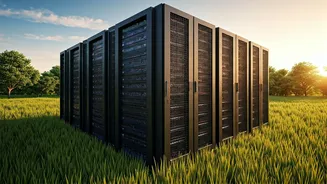

AI Data Centre Boom
The rapid growth of Artificial Intelligence (AI) data centers in India is a significant development, reflecting the nation's increasing technological advancement
and digital footprint. These data centers, which house the infrastructure needed to support AI applications, are becoming increasingly vital for various sectors, including business, healthcare, and education. This expansion signals a considerable shift in India's technological capabilities and its ambitions to be a global leader in AI. However, this growth also introduces important questions about how these centers will impact the country's energy infrastructure and resources. The escalating demand for power by these data centers has the potential to influence energy policy and sustainability efforts, necessitating strategic planning and resource management to minimize adverse environmental effects.
Energy Governance Implications
The proliferation of AI data centers in India presents both opportunities and challenges for energy governance. On the one hand, the expansion of these data centers can stimulate economic growth by creating new jobs and attracting foreign investment. This, in turn, can contribute to the development of a more robust digital economy. On the other hand, data centers consume vast amounts of energy to run and cool their servers, placing significant strain on the existing energy grid. Meeting this escalating demand requires careful consideration of the energy mix, which includes exploring renewable energy sources and enhancing the efficiency of energy consumption within the data centers. Policymakers must create regulations that promote the sustainable operation of data centers while balancing economic development and environmental protection. This involves designing frameworks that encourage energy efficiency, promote the use of renewable energy, and ensure that the energy infrastructure can support the growth of the digital economy.
Policy and Sustainability
To address the energy-related challenges, effective policy interventions and sustainability initiatives are essential for India's energy governance. The development and implementation of a comprehensive national energy policy are crucial to guide the sustainable growth of data centers. Such a policy should focus on incentivizing the use of renewable energy sources, such as solar and wind power, to reduce the carbon footprint of data centers. Investment in smart grid technologies can optimize energy distribution and improve the overall efficiency of the power grid. Furthermore, there is a need to establish energy efficiency standards for data centers, which can be accomplished by encouraging the adoption of energy-efficient hardware and cooling systems. The government should also promote public-private partnerships to facilitate the development of sustainable energy infrastructure. By integrating these strategies, India can ensure that the growth of AI data centers supports the nation's economic objectives and contributes to a sustainable future.
Future Outlook
The future of AI data centers in India will depend on the effectiveness of energy governance strategies. The ability to meet the growing energy demands of data centers while minimizing environmental impact is critical for long-term sustainability. Continued investments in renewable energy and energy-efficient technologies are likely to become increasingly important. Additionally, advancements in AI itself could play a part in optimizing energy consumption within data centers. India's commitment to creating a sustainable digital infrastructure will influence its global competitiveness. Policy decisions and technological advancements should work in concert to ensure the balanced growth of AI data centers. India’s success in navigating these challenges can make it a model for other developing nations looking to leverage the benefits of AI while addressing environmental concerns.