





The Durand Line's Shadow
The enduring conflict between Pakistan and Afghanistan is deeply intertwined with the unresolved issue of the Durand Line, a 2,640-kilometer border established
in 1893 between British India and Afghanistan. Afghanistan has never formally recognized this demarcation as an international boundary, a stance that has perpetuated historical grievances. This artificial line, drawn by colonial powers, has historically divided Pashtun tribes, creating a persistent source of political friction between the two nations. Following Pakistan's independence in 1947, Afghanistan's solitary vote against Pakistan's admission to the United Nations underscored the profound impact of this border dispute, which remains a fundamental political and emotional challenge shaping their bilateral relations and contributing to ongoing instability. The initial years after Pakistan's formation saw Afghanistan actively supporting the concept of "Pashtunistan," advocating for an independent state comprised of territories within Pakistan's northwest. This period, spanning the 1950s and 1960s, was marked by intermittent border skirmishes and periodic severing of diplomatic ties. While these tensions did not escalate into full-scale warfare, they contributed to a climate of persistent unease and sporadic violence along the shared frontier, laying the groundwork for future confrontations and distrust. Furthermore, the Soviet-Afghan War from 1979 to 1989 significantly militarized the border region. Pakistan, with support from the U.S. and Saudi Arabia, became a crucial staging ground for Afghan Mujahideen fighters, facilitating their training and armament through the Pakistani intelligence service (ISI). This era witnessed an influx of millions of Afghan refugees into Pakistan, inadvertently strengthening nascent Islamist militant networks. These networks, forged in the crucible of conflict, would later contribute to destabilizing both Afghanistan and Pakistan, becoming a persistent security challenge that continues to plague the region and complicate interstate relations.
Taliban Rise and Post-9/11 Tensions
The 1990s saw Pakistan play a pivotal role in the rise of the Taliban, a movement that eventually seized control of most of Afghanistan by 1996. This development not only led to Afghanistan's internal civil war spilling over into Pakistan, creating further instability, but also fueled accusations from Kabul that Pakistan was backing Taliban militants as a strategic maneuver to enhance its regional influence. This period marked a complex intertwining of internal Afghan dynamics with external Pakistani policy, where support for one faction inadvertently contributed to regional instability. The post-9/11 era introduced a new layer of complexity. While Pakistan officially joined the U.S.-led war on terror following the 2001 attacks on American soil, successive Afghan governments consistently leveled accusations against Islamabad. These claims centered on Pakistan allegedly providing safe havens for Taliban leaders within its territory. The border region became a flashpoint for escalating violence, characterized by cross-border shelling, infiltration by militants, devastating suicide bombings, and extensive Pakistani military operations conducted in its tribal areas. This period solidified the perception of Pakistan as a dual player, publicly aligning with the war on terror while allegedly harboring elements actively fighting against the Afghan government and its international allies. Adding to this volatile mix was the emergence of the Tehrik-i-Taliban Pakistan (TTP). This Pakistani militant group, distinct from Afghanistan's ruling Taliban but ideologically aligned, began launching attacks within Pakistan itself. This internal threat, allegedly operating from Afghan soil, further complicated Pakistan's security calculus and intensified its demands for the Afghan government to take action against these groups, creating a cycle of accusations and counter-accusations that continue to fuel tensions along the border.
The TTP Factor and Border Clashes
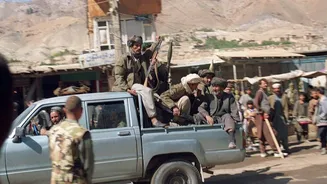
The presence and activities of the Tehrik-i-Taliban Pakistan (TTP) represent a critical and ongoing security challenge for Islamabad. While the TTP is a separate entity from the current Taliban administration in Afghanistan, they share a common ideological foundation, and the TTP's primary objective remains the overthrow of the Pakistani state. Pakistan asserts that TTP fighters are actively operating from Afghan provinces situated near the shared border. The Afghan Taliban leadership, while officially denying any direct support for the TTP, has not taken decisive action to dismantle the group's infrastructure or operations within their territory. This persistent, unresolved militant presence forms the crux of Pakistan's core security dispute with the Afghan Taliban government. Another significant catalyst for recent border confrontations involves Pakistan's ongoing efforts to fortify the Durand Line with fencing. Afghan Taliban forces have, on multiple occasions, actively removed or obstructed this construction. These actions often lead to direct engagements, with both sides deploying troops to the disputed areas, resulting in armed shootouts. These incidents highlight the tangible friction points along the border and the Afghan Taliban's resistance to the physical demarcation of the line, further exacerbating tensions. In parallel, Pakistan has undertaken significant measures to arrest and deport large numbers of undocumented Afghan refugees. Islamabad has linked these refugee flows to potential security threats, a claim that has been met with strong objections from the Afghan government. These deportations have significantly worsened diplomatic relations, adding another layer of strain to an already fraught bilateral relationship. The combination of the TTP threat, border disputes over fencing, and refugee-related tensions creates a volatile environment ripe for escalation.
The 'Open War' Declaration
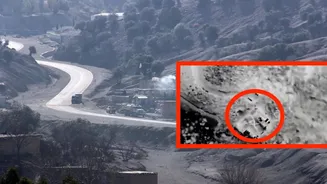
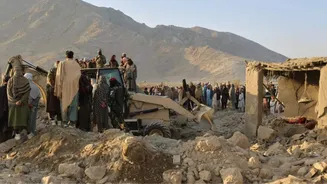
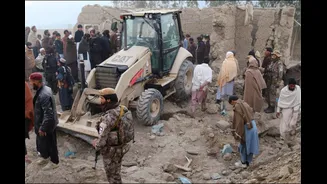
The recent escalation reached a critical point with Pakistan's declaration of an "open war" against Afghanistan. This declaration followed Pakistan's airstrikes targeting locations in Kabul, Kandahar, and Paktia, which Islamabad stated resulted in the deaths of over 130 Afghan Taliban fighters. Pakistan's Defence Minister, Khawaja Asif, explicitly stated that Islamabad had "lost its patience" and accused the Taliban-led administration of harboring militants responsible for cross-border attacks. His strong statement on X conveyed a sentiment of profound frustration, suggesting a turning point in bilateral relations. He emphasized that "now it is open war between us and you. Now it will be ‘Dama Dam Mast Qalandar’," a phrase often associated with intense conflict or decisive action. He also highlighted the proximity and shared history between the two nations, asserting that Pakistan "did not come from across the seas" and "knows your ins and outs." Afghanistan, in response, condemned the Pakistani strikes as "cowardly," with spokesperson Zabihullah Mujahid reporting that the Pakistani military had conducted airstrikes in certain areas, though fortunately without reported casualties. Conversely, Afghanistan's Ministry of National Defence claimed that 55 Pakistani soldiers were killed in retaliatory operations along the Durand Line. This claim was made in a press release detailing an operation launched on February 26th, described as a response to a prior violation of Afghan territory by Pakistani forces, which reportedly resulted in the martyrdom of women and children. The ministry further stated that their retaliatory operations led to the capture of two bases and 19 posts. Pakistan initiated its own operation, dubbed ‘Ghazab Lil Haq’, targeting the Afghan Taliban regime. According to reports, Pakistan's Prime Minister's spokesperson alleged that 133 Afghan Taliban fighters were killed, over 200 wounded, and 27 Taliban posts were destroyed with nine captured. This exchange of claims and counter-claims underscores the intensity of the current conflict, where both sides are engaged in military actions and actively publicizing their successes and justifications to the international community.
Ceasefire and Lingering Mistrust
In a bid to de-escalate, Afghanistan and Pakistan agreed to a short, 48-hour ceasefire in October 2025, following a period of intense border clashes. These clashes were instigated by militant attacks and subsequent retaliatory airstrikes from both sides. The truce was facilitated through urgent diplomatic channels and mediation efforts involving regional players, notably Qatar and Turkey, who urged both nations to pause hostilities and open lines for dialogue. However, the ceasefire proved to be a temporary measure, lacking any formal enforcement mechanism or a substantive agreement to address the underlying causes of the conflict. Once the 48-hour period expired, the pre-existing tensions and accusations quickly resurfaced. Pakistan reiterated its allegations of continued cross-border activity by the TTP originating from Afghan territory. Simultaneously, Afghan authorities accused Pakistan of conducting renewed airstrikes and violating their sovereignty. The deep-seated mistrust between the two nations remained largely unaddressed, and the absence of enduring security guarantees meant that border tensions and sporadic clashes inevitably resumed in the subsequent months. This cycle of brief truces followed by renewed hostilities highlights the profound challenge in achieving lasting peace and stability along the Pakistan-Afghanistan border.