







Oil Prices Surge Dramatically
The global energy landscape has been significantly altered by the unfolding conflict involving Iran. Crude oil prices experienced a sharp ascent, with
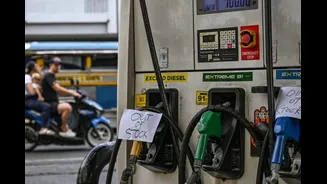
Brent crude briefly touching $119.50 per barrel and West Texas Intermediate reaching $119.48 early on a Monday. These figures represent price levels not seen since 2022, a period marked by Russia's full-scale invasion of Ukraine. This volatility underscores the critical role of the region's oil supply in maintaining global economic stability. The market's reaction highlights a growing seriousness in acknowledging the war's potential to disrupt a substantial portion of the world's energy flow, creating widespread concern among financial institutions and governments.
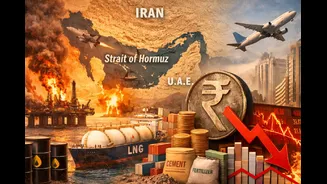
Strait of Hormuz Blocked
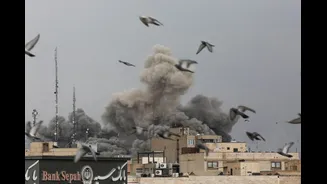
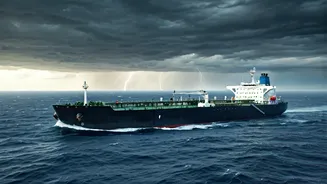
A critical artery for global energy, the Strait of Hormuz, has seen traffic effectively cease due to the ongoing conflict. This vital waterway typically facilitates the transit of approximately 20 percent of the world's oil supply. However, the palpable threat of Iranian retaliation and soaring insurance premiums have made shipping companies unwilling to risk traversing the passage. Adding to the pressure, Israeli strikes on Iranian oil facilities, reportedly the first of their kind since the war commenced, are anticipated to worsen the already precarious situation. In response to sustained strikes on its energy infrastructure, Iran has signaled its intent to retaliate by targeting oil facilities in neighboring Gulf countries. A spokesperson for Iran’s Islamic Revolutionary Guard Corps stated that if the assaults continue, oil prices could exceed $200 per barrel, indicating a dangerous escalation strategy.
Government Responses and Concerns
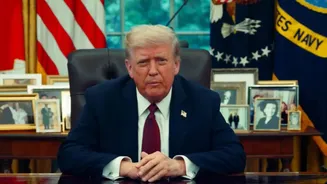
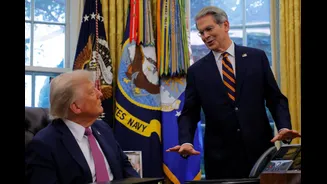
The White House has attempted to assuage fears regarding the escalating oil prices, with President Donald Trump suggesting a market correction was imminent and that the Strategic Petroleum Reserve would not need to be tapped at that moment. Energy Secretary Chris Wright assured that traffic through the Strait of Hormuz would resume once U.S. forces neutralize Iran's capacity to threaten maritime operations. Wright also stated to CNN that the United States has no intention of targeting Iran's oil industry directly. Meanwhile, finance ministers from the G-7 nations convened to discuss the surge in crude costs. While they opted not to release strategic reserves immediately, the possibility of future action was not ruled out. French Finance Minister Roland Lescure indicated that they were not yet at that stage but remained prepared to implement necessary measures, including stockpile releases, to bolster global energy supply. The international community is closely monitoring these developments, seeking to balance de-escalation with market stability.
Regional Stability and NATO Involvement
Widespread bombardments from all involved parties are creating a palpable risk of the conflict widening. On a recent Monday, NATO's air defense systems intercepted a second Iranian ballistic missile, this instance occurring after it had already breached Turkish airspace. Turkey's defense ministry issued a strong statement, emphasizing that "all necessary measures will be taken decisively and without hesitation against any threat directed at our country's territory and airspace." Despite this incident, Turkish President Recep Tayyip Erdogan has thus far refrained from invoking NATO's Article 4, a provision that would necessitate a collective assessment of whether a member state is under threat. Erdogan has articulated Ankara's primary objective as keeping the country out of the Iran war, a significant stance given Turkey's position as NATO's second-largest military power. This situation highlights the complex diplomatic and security challenges arising from the conflict.
Other Key Developments
Amidst the broader conflict, several other significant events are unfolding. Iran has accused U.S. forces of attacking a desalination plant on Qeshm Island, impacting water access for 30 villages. Subsequently, Bahrain accused Tehran of causing significant damage to another desalination facility and indiscriminately targeting civilian areas. Iran's Foreign Minister cited these actions, stating, 'The U.S. set this precedent, not Iran.' Separately, video evidence suggests a U.S. Tomahawk missile struck an Iranian elementary school, resulting in at least 175 fatalities; the U.S. Department of Defense is investigating. The U.S. military also reported the death of a seventh service member, who sustained fatal wounds from an Iranian strike on a Saudi military base housing U.S. troops. In a significant internal development, Iranian authorities named Mojtaba Khamenei as the nation's new supreme leader, succeeding his father who was reportedly killed in recent U.S.-Israeli strikes. These diverse events highlight the multifaceted nature of the ongoing crisis.