
US Interest in Greenland
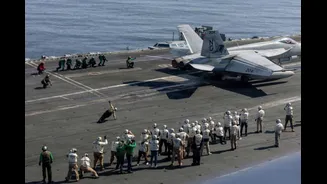
The US has expressed considerable interest in Greenland, primarily for strategic and military reasons. Former President Trump voiced a desire to acquire
the island, citing its importance for national security, missile defense, and potentially countering Russian and Chinese influence in the Arctic. He underscored the need to strengthen NATO and asserted that Greenland in US hands would make the alliance more effective. This interest has led to discussions and meetings between US and Danish officials, reflecting a significant shift in the geopolitical landscape of the region and raising concerns among Danish and Greenlandic leaders.
Danish Opposition and Concerns
Denmark strongly opposes the US taking over Greenland, viewing it as a violation of territorial integrity and Greenland's right to self-determination. Danish officials have emphasized the existing defense agreement, which already allows the US to use the territory for defense purposes. They believe that a takeover is unnecessary and unacceptable. The Danes also highlight Greenlanders' opposition to joining the US, as demonstrated by a poll where only 6% supported the idea. Furthermore, Denmark is bolstering its military presence in the far North, with the support of NATO allies, signaling its commitment to defending the territory and its sovereignty.
Greenland's Perspective
Greenland, a semi-autonomous territory under the Kingdom of Denmark, has made it clear that it does not want to become part of the US. Greenlandic leaders have categorically ruled out joining the US, indicating that if a choice had to be made, they would choose to remain with Denmark. They emphasize their right to self-determination and object to any proposals that would undermine their territorial integrity. Greenland's stance reflects a strong desire to maintain its cultural identity and control over its future. They are also wary of the potential impacts of a US takeover on their economy, environment, and social structure.
Potential Scenarios and Outcomes
Several scenarios could play out regarding Greenland's future. The US could deploy additional troops under the existing defense agreement, which could escalate military presence. A less likely scenario involves the US using military force to seize key infrastructure, though this would face legal and political resistance. Another possibility involves a minerals deal, similar to Ukraine's model, where the US gains access to Greenland's resources in exchange for security guarantees. This alternative could allow the US to claim success without outright annexation. The situation is complex and subject to intense diplomatic negotiations between the involved parties.
Ongoing Disagreements Remain
Despite discussions, fundamental disagreements persist between the US and Denmark regarding Greenland's future. Danish officials, after meetings in Washington, have confirmed the ongoing disputes, particularly related to the respect for Greenland's self-determination and Denmark's territorial integrity. A high-level working group on Greenland was established to continue discussions. The situation reflects an ongoing struggle for influence and control over the Arctic, with each side holding firm to their positions and seeking to achieve their strategic goals. The outcome will have long-lasting consequences for the geopolitical landscape.




![[WATCH] 'Real Madrid, Ramadan and rest' - Mohammed Siraj how last-minute World Cup call-up changed February plan](https://g-mob.glance-cdn.com/public/fc/image/ByYT_LEmlrD0.webp)