






Initial Stance and Threats
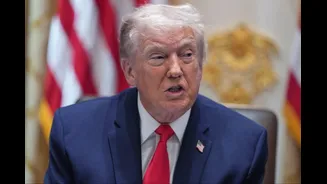
Earlier on the same day, Trump had spent over an hour issuing dismissive threats and criticisms, making countries already uneasy feel more so. The initial
approach by Trump involved the possible use of tariffs, creating significant tensions within the NATO alliance. This strategy, aimed at influencing the situation regarding Greenland, led to widespread concern among allies. The underlying cause for Trump's initial actions was his desire to establish a deal over Greenland, focusing on strategic benefits like a missile-defense system and mineral access, as well as keeping Russia and China out of the Arctic.
Sudden Change of Heart
However, the trajectory changed when Trump abruptly stepped back from the threats of imposing tariffs. This reversal was a noticeable shift from his earlier stance, as he moved towards a more conciliatory approach. This change occurred during a meeting in Davos, Switzerland. The immediate impact was the de-escalation of potential trade disputes. Trump's altered approach included emphasizing a 'long-term deal' that would benefit all parties involved, particularly concerning security and mineral resources. This change has helped to bridge the open rift that was growing between allies and allowed a private discussion to take place.
Focus on Negotiations
Following Trump's shift in stance, negotiations were set to move forward. These talks are between Denmark, Greenland, and the United States, with a specific focus on preventing economic or military footholds by Russia and China in Greenland. While no exact dates or locations were announced for these negotiations, key figures, including Vice President J.D. Vance, Secretary of State Marco Rubio, and envoy Steve Witkoff, were designated to participate in the discussions. The goal of these negotiations, as stated by Trump, is to safeguard the Arctic region, which is currently experiencing significant changes, especially in the context of growing activities by China and Russia.
Strategic Implications and Alliances
The decision to soften the tone has strategic implications for the NATO alliance. The softening of the tone and the shift towards diplomacy helped to reduce friction between allies. The discussions between Trump and NATO Secretary General Mark Rutte underscored the importance of a coordinated approach among Western Arctic allies. This collaboration aims to forge a new deal over Greenland, which has a population of approximately 57,000, that meets the US’s strategic goals. The strategy includes the 'Golden Dome' missile-defense system, access to essential minerals, and preventing Russian and Chinese influence in the Arctic region. This deal is designed to position everyone favorably, particularly in terms of security and mineral resources, according to Trump's statements.
Putin's Perspective
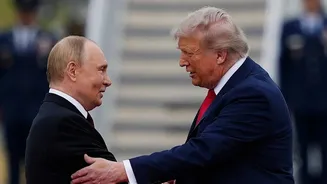
Russian President Vladimir Putin offered a perspective that framed the situation in terms of minimal impact on Russia. During a meeting of the country's National Security Council, Putin stated that the events concerning Greenland are of 'absolutely no consequence' to Russia. This comment indicated a level of detachment from the developments, adding another dimension to the international dynamics surrounding the issue. Putin’s words, relayed by Russian news agencies, suggest that Russia views the situation without major concerns and considers it insignificant to their national interests. However, the exact implication of this statement is open to interpretation, with a focus on geopolitical positioning.