






The Hidden Pain
It's a common misconception that being young and active means immunity from physical ailments, but for many, a fit exterior masks a painful reality. Increasingly,
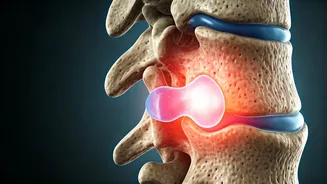
individuals who are dedicated to fitness are experiencing back problems typically associated with much older demographics. Dr. Nikhil Jain, a Consultant in Spine Surgery, sheds light on how detrimental posture and overtraining can progressively damage the spinal discs. He emphasizes that the constant pressure exerted on the spine from extended periods of sitting in a hunched position, combined with lifting heavy weights with compromised form or when muscles are fatigued, gradually wears down the protective cushioning between our vertebrae. This attrition can eventually lead to conditions like bulging discs and persistent pain, which often do not resolve with simple rest.
Spotting the Signals
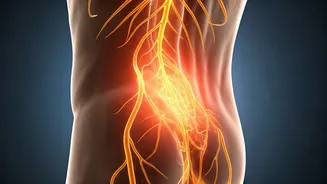
Dr. Jain advises keen observation of subtle bodily cues, as spinal issues often manifest without immediate alarm. Early detection is crucial, and he points to several key indicators that should not be dismissed. These include any sensation of tingling or numbness that radiates down an arm or leg, suggesting nerve impingement. Sharp, localized pain during movements like twisting or bending, distinct from a generalized muscle ache, is another significant warning. A feeling of instability or a limb 'giving out' also signals potential trouble. Furthermore, experiencing increased back discomfort while sitting compared to moving is a clear sign that your spinal discs are under undue compression and require attention.
Healing the Spine
The primary focus for alleviating back issues, according to Dr. Jain, is to reduce the strain on the spine, thereby facilitating its natural restorative processes. Many patients find substantial benefit from physical therapy regimens specifically designed to fortify the deep intrinsic muscles that provide vital support to the spinal column. In instances where a disc is significantly compromised and exerting pressure on a nerve, a minimally invasive surgical option known as microdiscectomy can be performed. This procedure involves removing a small segment of the damaged disc through a minuscule incision, often resulting in a swift recovery period. For others, targeted stretching exercises and anti-inflammatory management can help the disc gradually return to its proper position over time.
Fitness and Posture
Dr. Jain strongly reiterates that the posture maintained during non-exercise hours holds as much significance for spinal health as the workout itself. He strongly advises incorporating short, regular breaks every hour to stand and stretch, highlighting these simple actions as potent preventative measures against cumulative spinal wear and tear. Within the gym environment, the emphasis should always be on executing lifts with impeccable form, even if it means using lighter weights, rather than striving for personal bests that could result in injury. Being attuned to your body's signals, particularly recognizing and responding to acute pain sensations, is fundamental to sustaining an active and healthy lifestyle in the long run.