





Emperor’s Military Aspirations
Joseph II, the Holy Roman Emperor, was eager to expand his influence during his reign. In the late 18th century, he set his sights on the Ottoman Empire,
aiming to seize territories in the Balkans. This ambition led to a conflict, with the Austrian army being the primary force. This military venture was motivated by strategic gains and the emperor's determination to establish his mark on European history. Unfortunately, despite these lofty goals, the campaign would soon take a dramatic turn, resulting in a disastrous event that would be remembered for centuries.
Dissent and Drinking
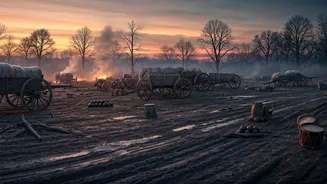
The Austrian army, eager for action, had settled near the town of Karansebes, waiting for Ottoman forces. The atmosphere was not one of discipline and readiness. A contingent of soldiers, specifically those from the scouting group, discovered a group of Roma selling alcohol. The lure of this easy availability led to an outbreak of heavy drinking and a general disregard for military procedure. As drunkenness spread, tensions began to escalate. Disputes, arguments, and altercations started to erupt amongst the troops, creating an environment that was unstable and ripe for chaos. The soldiers became increasingly disorderly, a significant factor in the events that followed.
The Clash Begins
As darkness fell, a dispute broke out over access to the available alcohol. The tension quickly spiraled out of control, resulting in violence and confusion. Troops from differing regiments, fueled by alcohol and animosity, began to turn on each other. The situation became completely chaotic, as soldiers fired weapons in the dark. The cries of 'Turks! Turks!' further exacerbated the frenzy, as troops mistakenly believed they were under attack by the Ottomans. The chaos of darkness, misunderstanding, and intoxication resulted in a disastrous fratricidal battle that was unlike any other in military history.
Collapse of the Campaign
The ensuing confusion brought about the complete undoing of the Austrian army near Karansebes. With no real enemy in sight, soldiers were now killing each other in droves. The noise from the gunfire, the shouts, and the screams from the wounded created an overwhelming atmosphere of chaos. The commanders struggled to restore order, but the lack of communication, combined with the extreme level of drunkenness, made it nearly impossible to control the situation. As dawn broke, the scale of the disaster became abundantly clear, with a significant amount of Austrian troops killed or wounded in their own 'battle', resulting in significant casualties and ultimately, a strategic setback that damaged the Emperor's grander ambitions.
Did it happen?
The Battle of Karansebes has become a subject of great debate. Some historians suggest the incident was exaggerated or embellished, highlighting inconsistencies in accounts. However, most accept that a form of friendly fire occurred. Records from the period reveal losses and disorder, backing the core narrative of an internal conflict. Though details may be disputed, the tragic events around Karansebes are a reminder of the destructive effects of miscommunication, chaos, and the unfortunate consequences that can occur when armies turn against themselves.