






Beyond Binary Politics
Tamil Nadu's political battlefield has evolved significantly, moving beyond the long-standing rivalry between the DMK and AIADMK. Ground reports indicate
a more intricate, at least a three-way contest, with the Tamizhaga Vettri Kazhagam (TVK) emerging as a central player. Voters across the state are discussing TVK, regardless of their ultimate voting intentions. The presence of Naam Tamilar Katchi (NTK) further complicates the scenario, pushing it towards a four-way race in many areas, and even five or six-cornered contests in specific pockets. This complexity presents a significant challenge for pollsters, particularly concerning the unpredictable impact of actor Vijay's fan base, whose support could erode votes from any of the major parties and is a key factor making election outcomes incredibly difficult to forecast with certainty.
Anti-Incumbency Dynamics
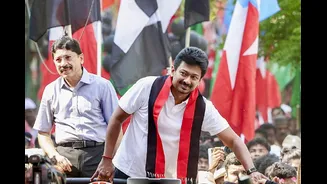
Despite the inherent challenges of incumbency, the ruling DMK exhibits a notable absence of complacency, with leadership keenly aware of potential anti-incumbency sentiments and the need to solidify ground support. The party's strategy centers on meticulous alliance management, successfully maintaining cohesion among coalition partners and even expanding its reach while ensuring seamless coordination down to the constituency level. A prime example of this is observed in Virudhunagar, where a two-term DMK MLA graciously conceded the seat to the DMDK, a new ally, for the candidacy of Vijay Prabhakar, the late actor Vijayakanth's son. This coordinated campaign effort, with the MLA actively supporting the new candidate, underscores the DMK's focus on ensuring victories for its allies. The party's overall campaign is a carefully calculated equation of synchronized alliances, a manifesto designed to mitigate voter fatigue, and a robust organizational and propaganda network operating at peak efficiency. This integrated approach could prove decisive in a closely contested election, especially as the anti-incumbency vote is fragmented between the TVK and the AIADMK, preventing a unified challenge.
The Youth Vote Surge
A significant demographic shift is evident in Tamil Nadu, with over 40% of the electorate falling under the age of 40, forming the core demographic for actor Vijay's appeal. Across major cities like Chennai, Trichy, Madurai, and Tirunelveli, younger voters display palpable enthusiasm, consistently expressing support for Vijay when engaged in conversations, from service industry workers to market vendors. Many of these young voters originate from families with historical allegiances to either the DMK or AIADMK, indicating a potential disruption to traditional party strongholds. The energy observed among young participants at DMK rallies, who initially and instinctively responded with 'Vijay' when asked about their voting preference, highlights the profound impact of this generational divide. This movement poses a considerable threat to the DMK's long-standing dominance among urban and young demographics, with the potential to fundamentally alter the state's electoral map.
AIADMK's Uneven Ground
The AIADMK, despite its tenure in opposition and the absence of iconic leaders like MGR and Jayalalithaa, maintains a resilient organizational structure under Edappadi Palaniswami's leadership. The party's influence is particularly strong in western Tamil Nadu, notably around Salem, and the alliance with TTV Dhinakaran's AMMK bolsters its position through caste-based arithmetic in the southern regions. However, the party's strength is not uniformly distributed across all constituencies, appearing less robust in northern urban centers. A critical challenge arises from the TVK, which is drawing away anti-DMK votes and making inroads into traditionally AIADMK-aligned women voters. For the AIADMK, this election carries existential implications; while a loss for the DMK would be a setback, the AIADMK risks a significant redefinition of its future if it continues to cede ground to the TVK.
Minority Vote Calculus
The Muslim vote, constituting approximately 6% of the electorate, appears largely unified behind the DMK alliance. In contrast, the Christian vote, around 6%, exhibits greater fluidity this election cycle. Actor Vijay's appeal appears to be creating a generational fissure within the Christian community, with younger members showing more receptiveness compared to older generations, who tend to remain aligned with the DMK. Given that minority communities collectively account for about 12% of voters, even minor shifts can significantly influence outcomes. In constituencies like Perambur and Trichy East, which have a higher-than-average Christian population and where Vijay himself is contesting, the narrative on the ground often frames the contest as a direct 'Vijay vs. DMK' battle, with the AIADMK often relegated to the sidelines of this particular conversation. These dynamics represent crucial fault lines that could lead to unexpected results.
Micro-Battles, No Wave
This election is characterized by a series of localized contests rather than a sweeping wave, with each constituency presenting its own unique electoral dynamics. Smaller parties, such as the NTK, are facing increased pressure, as their consistent 6-8% vote share is now at risk of being diminished by Vijay's consolidation of the 'third force' vote. Should the TVK manage to capture a substantial portion of the approximately 20% vote share traditionally held by smaller parties, it could dramatically alter the entire electoral equation. The established political arithmetic is likely to prove insufficient, posing an existential threat to numerous smaller parties that have historically aligned with the major Dravidian parties to maintain their electoral relevance in the state. The old formulas for success are no longer guaranteed.