
Emperor Penguins
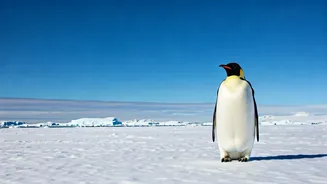
Emperor penguins are truly iconic residents of Antarctica. They are the largest of all penguin species, standing impressively tall and renowned for their
remarkable ability to endure the harsh conditions of the continent. They are masters of survival, particularly when it comes to the frigid Antarctic winters. During this challenging time, emperor penguins huddle together, forming large colonies to share body heat and survive the biting cold. They breed in these freezing conditions, laying their eggs on the sea ice. The males play a crucial role, incubating the eggs while enduring extreme temperatures. These fascinating birds are a testament to nature's ability to adapt and thrive in even the most extreme environments, making them a significant attraction for visitors.
Crabeater Seals
Despite their name, crabeater seals don't actually eat crabs! They primarily feed on krill, tiny shrimp-like crustaceans that swarm in Antarctic waters. These seals have evolved unique teeth structures that allow them to effectively filter krill from the water. Crabeater seals are incredibly abundant, and they play a vital role in the Antarctic food web. They are a common sight on the ice floes, where they haul out to rest and bask in the sun, making them easily observable for visitors. These seals are well-adapted to the icy conditions, with thick blubber layers and sleek bodies designed for efficient swimming. Witnessing these animals in their natural habitat provides a memorable experience for any visitor to Antarctica.
Weddell Seals
Weddell seals are known for their docile nature and are often seen resting on the ice near research stations. They are remarkable divers, able to hold their breath for up to 80 minutes, allowing them to explore the depths of the icy waters. They are well-adapted to life in the Antarctic, featuring thick layers of blubber to protect them from the cold. Weddell seals have special adaptations in their blood, which helps them store and transport oxygen more efficiently during their dives. They are often found near the coast, where they maintain access to breathing holes in the ice, allowing them to remain underwater for extended periods. Their calm demeanor and unique diving abilities make them a captivating sight for visitors.
Leopard Seals
Leopard seals are apex predators in the Antarctic ecosystem, known for their powerful jaws and sleek, spotted bodies. They are skilled hunters, preying on penguins, other seals, and fish. These seals are named for their leopard-like markings. They are solitary creatures, and their hunting prowess makes them a significant presence in the Antarctic waters. The leopard seal's intimidating appearance and hunting skills are a clear indication of their vital role in the ecosystem. Watching these impressive hunters in action is a thrilling experience, providing visitors with a glimpse of the raw power and beauty of the Antarctic wilderness.
Antarctic Krill
Antarctic krill, though small, are the cornerstone of the Antarctic food web. These tiny crustaceans form massive swarms and are a primary food source for many animals in the region, including whales, seals, and penguins. Krill feed on phytoplankton, microscopic algae that thrive in the nutrient-rich waters. Their abundance is a sign of a healthy Antarctic ecosystem, and their presence is essential for sustaining the diverse wildlife. They play a critical role in transferring energy from the phytoplankton to larger animals. Observing swarms of krill, whether through scientific study or from the surface, reveals the critical role of these minute creatures in Antarctica's balanced ecosystem.
Snow Petrels
Snow petrels are strikingly beautiful birds, easily recognized by their pure white plumage, perfectly suited for the snowy landscapes of Antarctica. They are commonly found nesting in the rocky coastal areas and islands, forming colonies. These birds are well adapted to the extreme conditions, with the ability to withstand cold temperatures and powerful winds. They are primarily seabirds, feeding on krill, fish, and other marine creatures. Their pristine white feathers create a striking contrast against the dark rocks and icy surroundings. Their survival depends on their ability to find food in the cold waters and to find safe places to breed, adding to the beauty of the Antarctic landscape.
Orcas (Killer Whales)
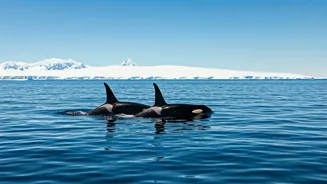
Orcas, also known as killer whales, are apex predators that roam the Antarctic waters. They are highly intelligent, social animals, known for their sophisticated hunting techniques and complex social structures. They prey on a wide range of animals, including seals, penguins, and even other whales. Orcas are easily recognizable by their distinctive black and white markings and large dorsal fins. They are a powerful symbol of the Antarctic wilderness, and their presence adds a thrilling element to the ecosystem. Their social behavior and hunting techniques make them fascinating to observe, and their role as apex predators contributes to a balanced and diverse ecosystem in the Antarctic region.