







Countdown and Testing
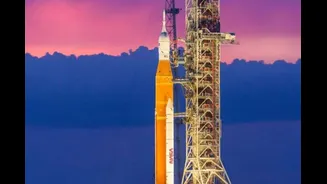
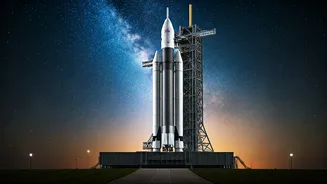
NASA's Artemis II mission is undergoing crucial pre-launch tests. The space agency has initiated a practice countdown, beginning at 8:13 pm EST (6:43 am
Indian time), 40 minutes before the opening of a simulated launch window at 9 pm EST on February 2. This test is projected to last until approximately 1 am on Wednesday, February 3 (11:30 am IST). The purpose of the exercise is to prepare the launch team and support staff across various NASA centers. It involves loading cryogenic liquid propellant into the Space Launch System (SLS) rocket, conducting a launch countdown, recycling the countdown clock, and draining the tanks to simulate scrub procedures. This extensive process aims to ensure the rocket and all its systems are ready for the upcoming crewed lunar mission. This phase of testing is a key element in the run-up to the crewed launch around the Moon, and helps to determine if all the systems are ready to support a crewed mission.
Crew and Mission
The Artemis II mission is a crucial step for NASA, with the launch planned from Launch Complex 39B at the Kennedy Space Center in Florida. The crew, including Commander Reid Wiseman, Pilot Victor Glover, mission specialist Christina Koch, and mission specialist Jeremy Hansen from the Canadian Space Agency, will embark on an approximately 10-day journey. Their objective is to orbit the Moon in the Orion spacecraft, propelled by the SLS rocket. The service module is designed to carry the astronauts on a journey of about four days. The journey will take the crew around the far side of the Moon, over 230,000 miles from Earth. The crew is currently in quarantine in Houston, with precautions such as heaters at the top of the Orion capsule and purging systems to maintain appropriate conditions for the mission's success.
Apollo's Legacy and Artemis
The Artemis program aims to build upon the legacy of the Apollo program, which saw 24 astronauts sent to the Moon from 1968 to 1972, with 12 of them walking on its surface. The Artemis II mission represents a resurgence in crewed lunar exploration, with the planned launch potentially occurring as early as February 8. The crew will face a high-speed, high-temperature reentry into Earth’s atmosphere before splashing down in the Pacific Ocean, near San Diego. The successful completion of this mission will verify the US’s capability for deep space exploration, paving the way for future crewed missions to the Moon and beyond. The preparation involves significant coordination, including the simulation of launch operations to ensure all aspects of the mission are meticulously planned and executed.
Anticipation and Coordination
NASA officials are carefully coordinating the Artemis II launch with other missions. The goal is to maximize the efficiency of operations while ensuring the safety of astronauts and the integrity of missions. The upcoming mission involves not only the launch of the rocket but also the simulation of every phase of the mission, including fueling, countdown, and practice procedures. The launch will be the first crewed flight test of the Space Launch System rocket and Orion spacecraft around the Moon. This will verify US capabilities for humans to explore deep space. The test also involves many teams from the Mission Control Center at NASA’s Johnson Space Center in Houston and other supporting NASA centers. This coordinated approach underscores the complexity and ambition of the Artemis II mission and its significance to the future of space exploration.