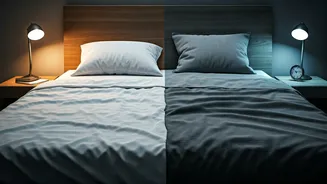








The Sleep Divorce Dilemma
In a recent discussion, actress Soha Ali Khan brought up the intriguing concept of 'sleep divorce,' a growing trend where partners opt for separate sleeping
arrangements to ensure undisturbed rest. Khan expressed her personal desire to circumvent this situation, prompting an expert, Dr. Viny Kantroo, a Pulmonology and Respiratory Medicine Specialist, to offer solutions. Dr. Kantroo highlighted that underlying medical conditions, such as sleep apnea, are often the root cause of disruptive sleep for one partner. She stressed that sleep apnea is a treatable condition and encouraged couples experiencing such issues to seek professional medical advice. Additionally, she provided practical advice for common sleep disturbances like snoring, suggesting that avoiding alcohol consumption before bedtime can significantly reduce its occurrence. For those who snore, sleeping on one's side is recommended as a simple yet effective positioning technique that can alleviate the problem, as snoring is frequently dependent on sleeping posture rather than being a permanent affliction.
Sleep: The Body's Crucial Maintenance
The fundamental importance of sleep is often underestimated, yet it serves as the body's essential period for repair and rejuvenation. During sleep, critical processes occur, including the consolidation of memories, the enhancement of emotional well-being, and the strengthening of the immune system. Dr. Kantroo emphasized that sleep is not merely a passive state of rest but an active period for healing and restoration. This is when the brain processes and stores information acquired throughout the day, a phenomenon known as memory consolidation. Furthermore, the brain engages in a vital 'decluttering' process overnight, facilitated by a specialized fluid that actively flushes out toxins. This nocturnal cleansing mechanism is paramount for cognitive function and overall brain health. Neglecting sleep deprives the body of these essential restorative functions, impacting everything from muscle repair to cellular regeneration.
Sleep Needs: How Much Is Enough?
Determining the optimal duration for sleep is crucial for maintaining health and productivity. For adults, the general consensus among experts, including Dr. Kantroo, is that a minimum of 7 to 8 hours of sleep per night is necessary. This recommendation holds particularly for individuals in the 20 to 40 age bracket, a period often characterized by significant physical and mental demands. The sleep requirements vary considerably with age, with younger individuals needing more rest to support their rapid development. Infants, for instance, require substantial sleep, potentially up to 18 hours daily, to facilitate their tissue growth and development. Understanding these age-specific needs helps in establishing healthy sleep patterns from an early age, laying the foundation for lifelong well-being.
The Perils of Sleep Deprivation
Chronic sleep deprivation carries a host of serious health consequences, impacting both physical and cognitive functions. According to Dr. Kantroo, even a few hours of lost sleep over several days or weeks can lead to an elevated heart rate, a condition known as tachycardia. Beyond cardiovascular effects, insufficient sleep severely impairs concentration, resulting in a 'foggy mind' and a noticeable lack of coordination between thought and speech. The expert also pointed to a concerning trend in India, where poor sleep patterns are contributing to a significant increase in metabolic disorders. This includes a rise in conditions such as diabetes and hypertension. Furthermore, obstructive sleep apnea is becoming more prevalent, often stemming from long-term sleep deprivation. This chronic lack of sleep can lead to insulin hyposensitivity, prompting the body to overproduce insulin at a microscopic level, which can, in turn, contribute to weight gain and other metabolic complications.
Navigating Sleep Aids Wisely
When sleep troubles arise, the temptation to reach for sleeping pills can be strong. Dr. Kantroo clarified that sleeping pills can be safe and effective when used on an intermittent basis, meaning occasionally and for short periods. However, she cautioned that frequent or prolonged use can lead to dependency and a cycle of escalating dosage, making it a 'slippery slope.' The critical takeaway is that self-medication with sleep aids is strongly discouraged. Various sleep-related issues exist, each with its own specific underlying causes and requiring tailored treatment. Consulting a healthcare professional is essential to accurately diagnose the sleep problem and receive an appropriate prescription, which will also be customized to the individual patient's health status and specific condition.