






A Fountain's Footfall
Every year, the Trevi Fountain attracts an enormous number of visitors, cementing its status as a must-see landmark. According to recent reports from Reuters,
authorities documented over 10 million visitors during the period from December 2024 to December 2025. This timeframe coincided with a significant event for the Catholic Church—the Holy Year, also known as Jubilee, which brought approximately 33.5 million pilgrims to Rome. The sheer volume of people underscores the fountain's enduring popularity and the immense tourism it generates, contributing to Rome's global allure and importance as a travel destination. The high visitor count highlights the need for effective management of the site to preserve its beauty and functionality.
Fees and Times
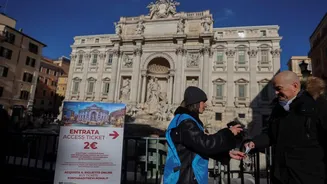
To address the challenges posed by high visitor numbers and to help maintain the fountain, the local authorities have implemented an entry fee. The charge is set at 2 Euro, which converts to approximately Rs 216. This fee structure is applicable during specific hours: weekdays, the fee is levied from 11:30 am to 10 pm, while on weekends, the charges are in effect from 9 am to 10 pm. These operating hours dictate when visitors will need to pay for access to the fountain's immediate vicinity. The fee provides crucial resources for the management of the crowds. The goal is to provide a good experience for visitors and, at the same time, ensure the preservation of this historical landmark.
Who's Exempt?
Certain groups of people are exempted from paying the newly introduced fee. Residents of Rome are allowed free access, ensuring that local citizens are not burdened by the charge for enjoying their city's iconic attraction. In addition to residents, individuals with disabilities and their companions also benefit from an exemption. Furthermore, children under the age of 6 are also free of any charge. These exemptions acknowledge the importance of the Trevi Fountain in the everyday lives of the locals. The policy reflects a balance between managing tourist flow and respecting the rights of residents and those with special needs.
Funds for Museums
A significant aspect of the new fee system is how the raised funds are planned to be used. According to Alessandro Onorato, Rome’s council member for tourism, the revenue generated from the fees will be channeled to support the locals. Specifically, the funds will grant Rome's residents free access to several museums within the city. This initiative provides a tangible benefit to the community. This measure helps promote cultural engagement among the locals, which is aimed at enriching the overall quality of life for the residents of Rome. This approach converts the entry fees into a way to enrich the local community.
Tourists' Reactions
The initial reactions of tourists to the introduction of the fee were generally positive. While the new charges came as a surprise to many visitors on the first day of implementation, the overall sentiment appeared to be acceptance. Many tourists expressed that they had “no problem with that”. This response suggests an understanding and willingness to contribute to the maintenance and preservation of the landmark. The lack of significant protest indicates that the fee is perceived as reasonable, especially considering the experience of being in close proximity to a world-famous attraction like the Trevi Fountain.