

Vlogger's Jeju Ordeal
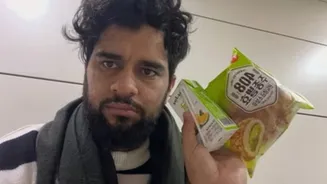
In late December, Indian travel vlogger Sachin Awasthi and his wife faced an unexpected nightmare when their festive holiday to Jeju Island turned into
a harrowing experience. Instead of enjoying the island's attractions, they claim to have been denied entry, subjected to an overnight detention, and ultimately deported. Awasthi described the 24 hours as the worst of his life, alleging that immigration officials processed their rejection without verifying return tickets or accommodation bookings, and confined them in what he characterized as 'jail-like conditions.' While acknowledging the immigration authorities' right to refuse entry, he expressed that the treatment they received was entirely unjustified. This incident has since ignited a significant discussion among Indian travelers regarding the practicalities and potential pitfalls of Jeju's vaunted visa-free policy, questioning its straightforwardness as often portrayed online.
Understanding Jeju's Special Status
Jeju Island holds a unique position within South Korea, officially designated as the Jeju Special Self-Governing Province. This semi-autonomous status, established on July 1, 2006, grants it distinct administrative powers from mainland regions. The primary aims behind this designation were to preserve Jeju's unique cultural and natural heritage, stimulate economic growth through deregulation, and cultivate its image as a 'Free International City.' As part of these initiatives, the South Korean government empowered Jeju to function as a highly autonomous special administrative zone. To further bolster tourism and foreign investment, Jeju has long implemented a limited visa-waiver program. This allows nationals from numerous countries to enter the island directly without requiring a standard South Korean visa, provided their arrival is on direct international flights to Jeju and they do not intend to travel onwards to the mainland. It's crucial to note that this visa-free access is an incentive designed to facilitate tourism, but it operates within the framework of national immigration laws.
Visa-Free Isn't Entry-Guaranteed
Despite Jeju Island's visa-free policy for many nationalities, including Indian passport holders arriving directly, it is imperative to understand that this status does not automatically guarantee entry. Immigration officers retain the ultimate discretion to refuse admission if they are not satisfied with a traveler's stated purpose of visit, the completeness of their documentation, or if they perceive any potential risk. The visa waiver operates under, and does not supersede, the broader national immigration laws of South Korea. This means that discretionary refusal powers remain fully intact for border officials. Such discretionary decisions can sometimes lead to accusations of bias or unfair treatment, particularly when travelers believe they have met all stated requirements. As Awasthi's experience suggests, officers are not obligated to provide exhaustive explanations for their decisions beyond general grounds such as an unclear purpose of stay. Therefore, while the visa-free waiver simplifies pre-travel arrangements by reducing paperwork, it does not eliminate the possibility of scrutiny or denial at the point of entry.
Navigating Visa-Free Challenges
Several critical factors must be considered when relying on Jeju Island's visa-free status. Firstly, the arrival route is paramount; travelers must enter Jeju directly from an overseas location. Transiting through mainland South Korea necessitates obtaining a standard visa beforehand. Secondly, visitors entering under the waiver program are restricted from traveling to the South Korean mainland. Thirdly, as highlighted by Awasthi's experience, immigration officers possess significant discretion and can deny entry if intentions appear unclear or documentation is deemed insufficient. While not always prominently advertised in simple terms, officers may assess a traveler's financial capacity to cover their stay. Awasthi himself questioned the rejection process, stating his documents were not thoroughly checked. Travel experts like Backpacking Daku advise caution, emphasizing that special zones like Jeju have specific rules that travelers must thoroughly research. Understanding the strength of one's passport and considering a formal visa application might offer greater certainty, as global travel dynamics can be influenced by perceptions of a country's passport.
Rising Scrutiny And Airlines' Role
The increased scrutiny at Jeju's borders, particularly for certain nationalities, stems in part from past instances where travelers have attempted to use the visa-free route to enter mainland South Korea and subsequently overstay or move unlawfully. Consequently, authorities have periodically enhanced their inspection processes. Awasthi's own research indicated that some individuals, predominantly from India and China, have used Jeju as a gateway to the mainland, leading to heightened vigilance towards travelers from these countries. While there is no official blanket ban on Indian nationals, anecdotal evidence suggests a rise in more stringent checks in recent years. This pattern is not isolated; other nations have also reportedly denied entry to Indian travelers despite visa-free provisions, citing discretionary powers. Furthermore, international aviation regulations place the responsibility for returning refused passengers on the airline that transported them. This often translates to airlines meticulously monitoring passengers and potentially restricting booking changes, as they bear the financial burden of repatriation if entry is denied.
Preparation for Visa-Free Travel
The incidents involving Jeju Island's visa-free policy underscore a broader reality in international travel: robust documentation, while important, does not always override an immigration officer's discretion. A clean travel history is beneficial but not a definitive guarantee of entry. Complicating factors can arise from transit visas and the specific routing of flights. In situations of airport detention, assistance from embassies might be limited. A key takeaway for Indian travelers considering Jeju's visa-free option is not to be discouraged by fear, but to prioritize thorough preparation and an awareness of potential risks. While the visa-free route offers convenience by reducing upfront paperwork, it carries a higher degree of unpredictability at the border. For those planning significant international trips, the time and fees associated with applying for a standard South Korean tourist visa through official channels may ultimately provide greater peace of mind and reduce the uncertainty inherent in on-arrival discretionary decisions. This peace of mind, in the complex world of international travel, can often be invaluable.