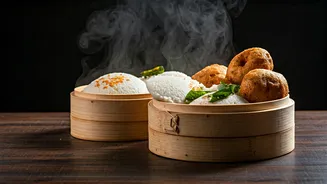








Idli: South Indian Staple
Idli, a steamed rice cake, stands as a cornerstone of South Indian cuisine. Its simplicity lies in a batter of fermented rice and urad dal, steamed to perfection.
The process involves soaking the rice and lentils, grinding them into a smooth batter, and allowing it to ferment overnight. This fermentation process is crucial, imparting a light and fluffy texture. Traditionally, idlis are served with sambar, a lentil-based vegetable stew, and coconut chutney, creating a balanced and flavorful meal. The versatility of idli allows for variations with different grains, adding vegetables, or incorporating spices. Its ease of digestion and nutritional value make it a popular choice for breakfast, suitable for all ages. Steaming ensures that the nutrients are retained, providing a healthy and satisfying start to the day.
Dhokla: Gujarati Delight
Dhokla, a steamed savory cake, is a beloved snack originating from Gujarat. Made from fermented batter of gram flour (besan), it's known for its fluffy and spongy texture. The batter is seasoned with spices like mustard seeds, green chilies, and ginger. The fermentation process is key for the airy structure. Dhokla is steamed until it becomes light and airy. It is typically served with a tempering of mustard seeds, curry leaves, and green chilies sizzled in oil, which is then poured over the dhokla, enhancing the flavor. Often, coriander leaves are used for garnish and add freshness. This snack is perfect with a cup of tea or as a light breakfast option. Its tangy-sweet taste and soft texture make it a popular choice across India.
Modak: Maharashtrian Sweet
Modak, a sweet dumpling, is particularly associated with the Hindu God Ganesha and is a Maharashtrian specialty. Traditionally, it is made with rice flour and a filling of grated coconut and jaggery, which is steamed or fried. The shape, usually resembling a small cone, holds the sweet filling. Steaming preserves the flavors and ensures that the modaks remain soft. The preparation involves careful shaping of the dough and a generous amount of filling. It is a significant element during the Ganesh Chaturthi festival, where it is offered to the deity. The sweet, coconut-based filling provides a rich flavor, and the rice flour wrapping provides the perfect texture. Modaks are enjoyed by people of all ages, bringing sweetness and festive cheer.
Puttu: Kerala's Pride
Puttu, a steamed cylindrical rice cake, is a staple breakfast item in Kerala. Made from layers of coarsely ground rice flour and grated coconut, it is steamed in a special puttu kutti (steamer). The preparation involves alternating layers of rice flour and coconut in the steamer. The moisture from the coconut helps in softening the rice. Puttu is traditionally served with kadala curry (black chickpea curry), or with banana and sugar. The simplicity of the ingredients belies the wonderful taste. Steaming is a vital step, lending a soft and fluffy texture. It is a quick, wholesome, and nutritious meal, perfect for a busy morning. The combination of rice and coconut is a perfect balance of carbohydrates and fats.
Idiyappam: String Hoppers
Idiyappam, also known as string hoppers, are steamed rice noodles popular in South India and Sri Lanka. They are prepared from rice flour dough, pressed through a sevai maker to create thin noodles, which are then steamed. These delicate noodles are typically served with stew, vegetable kurma, or coconut milk. The preparation requires a careful balance of water and flour to achieve the right consistency. Steaming ensures that the strands remain soft and hold their shape. The simplicity of ingredients belies the delicate flavors. These versatile noodles can be used in savory and sweet dishes. They are quick to prepare and easily digestible, a good breakfast alternative.
Khaman: Another Gujarati
Khaman is another popular Gujarati snack, similar to dhokla but with a different texture. This is made from gram flour, but usually includes baking soda for a fluffier texture. The batter is seasoned with spices, and it is steamed until it rises and becomes light and airy. Khaman often has a spongy and more airy texture compared to dhokla. Typically, it is served with a tempering of mustard seeds, curry leaves, and green chilies. It is often garnished with chopped coriander leaves. Khaman can be eaten as a snack or a light breakfast, paired with chutney or tea. It is known for its savory and flavorful profile, offering a delightful culinary experience.
Bati: Rajasthani Staple
Bati, a hard, baked or steamed bread, is a staple of Rajasthan, often paired with dal (lentils). The preparation involves making round balls from wheat flour dough, and these are traditionally baked in a special oven or steamed. The steaming process helps to create a soft interior while maintaining a slightly crispy exterior. Bati is usually served with dal and churma, a sweet dish made from crushed wheat, ghee, and sugar. The dish is hearty, filling, and provides a good source of energy. It is a delicious, well-balanced meal that showcases the rich culinary heritage of Rajasthan. It is easy to adapt to both steaming and baking, providing a traditional taste.
Poha: Flattened Rice
Poha, made from flattened rice, is a common breakfast dish across India. It is versatile, easy to prepare, and a light and healthy breakfast option. Poha is typically softened in water and then tempered with mustard seeds, onions, potatoes, and spices. The key to making good poha is to cook it just right, without making it too mushy. It can be garnished with fresh coriander leaves, lemon juice, and sev (crispy gram flour noodles). Poha is commonly available in various regional variations. It’s a complete meal: carbohydrates from the rice, with the addition of vegetables for additional vitamins and minerals. This breakfast is simple, tasty, and provides a quick energy boost.
Momo: Himalayan Delight
Momos, steamed dumplings, are a popular delicacy originating from the Himalayas and are widely eaten in the northeast of India. These dumplings are made with a wheat or all-purpose flour dough, filled with a mixture of vegetables, meat, or cheese, and then steamed until cooked. The preparation process involves creating the dough, preparing the filling, shaping the momos, and then steaming them. They are generally served with a spicy tomato-based chutney. The steaming process ensures that the filling is cooked well and that the momos retain their shape and flavors. Each region may have variations in ingredients or the way they are served. The delicious taste and ease of preparation of momos have made them a favorite across India.
Upma: Semolina Breakfast
Upma is a South Indian breakfast dish made from semolina (rava). It is prepared by roasting semolina and then cooking it with vegetables, spices, and water. The process involves sautéing the semolina to achieve a slightly nutty flavor before adding vegetables such as onions, carrots, and peas. The water is added to the mixture, and it is cooked until the semolina absorbs the water and becomes fluffy. Upma can be customized with different vegetables and spices to meet individual tastes. This breakfast is filling, nutritious, and quick to prepare, offering a satisfying and energetic start to the day. It is a versatile dish, popular across regions.