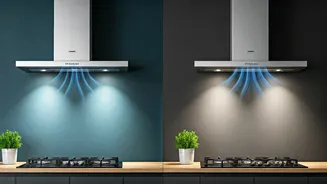

Ventilation Essentials Unveiled
Kitchen chimneys play a critical role in maintaining a comfortable cooking environment. The two primary types, duct and ductless, each utilize a distinct
mechanism to manage smoke, odors, and grease. Duct chimneys are connected to an outside vent, expelling air and contaminants directly. In contrast, ductless systems filter the air and recirculate it back into the kitchen. The effectiveness of each system hinges on the design, performance and individual needs of the user. Understanding the core differences is key to making the best selection for your kitchen.
Duct Chimneys: Pros & Cons
Duct chimneys excel at removing cooking byproducts by extracting air through a duct and exhausting it outside. A significant benefit is their superior effectiveness at eliminating smoke and strong odors, leaving the kitchen fresh. However, installation can be more complicated, involving the construction of a duct system, which may not always be feasible depending on the kitchen layout. The efficiency of a duct chimney also depends on the quality of installation and the power of its motor. Regular cleaning of the filter is essential for optimal performance.
Ductless Chimneys: Overview
Ductless chimneys offer an alternative ventilation method that's suitable for kitchens without external venting. These systems work by drawing air through filters, typically charcoal ones, that trap grease and neutralize odors before recirculating the purified air. The major advantage is the ease of installation; no ducts are necessary, making them ideal for spaces where ductwork is impractical. Nevertheless, ductless chimneys' efficiency is limited compared to duct models. Their filtration capability degrades over time, requiring periodic filter replacements to maintain clean air. Effectiveness varies depending on cooking intensity and filter maintenance frequency.
Airflow Performance Analysis
Personal experiences in the kitchen can illuminate the practical distinctions between these two types of chimney systems. When cooking practices generate substantial smoke or strong odors, the advantages of a duct chimney often become immediately evident. They efficiently remove contaminants, allowing for a cleaner and healthier kitchen atmosphere. The effectiveness of the ductless unit would be reduced when confronted with high-volume cooking, and the air purification might not match up with the needs of the user. Maintenance and filter replacement frequency will have a big impact on the overall performance of the ductless model.
Installation Considerations
The feasibility of installing either a duct or ductless chimney system varies based on existing kitchen infrastructure. Duct systems need a path to the outside, which could involve drilling through walls or the roof, increasing the complexity and cost of installation. Homeowners may need to engage professionals to ensure secure and compliant installation. On the other hand, ductless systems offer an accessible and versatile solution, particularly in apartment settings or older homes where the retrofitting of ductwork is prohibitive. The installation should still adhere to manufacturer's instructions for optimal performance.
Maintenance and Upkeep
Maintenance requirements for both chimney types involve regular cleaning and filter upkeep. Duct chimneys require periodic cleaning of grease traps and filter replacements, typically every few months, depending on use. Ductless chimneys demand more frequent filter changes, usually every three to six months. The need for these tasks can vary. Consistent maintenance helps to maintain the chimney's efficiency and prevent the build-up of contaminants. Neglecting these tasks reduces the system's effectiveness and could affect overall indoor air quality.
Cost Factor Evaluation
The initial cost of installing a chimney system and its operation over time are essential considerations. Duct chimneys typically have a higher upfront cost, accounting for materials, professional installation, and ductwork. However, these systems often provide superior ventilation and may reduce long-term energy costs by removing heat and moisture more efficiently. Ductless chimneys have lower initial costs due to simple installation, making them budget-friendly at the start. Nevertheless, the cost of replacing filters, recurring maintenance, and potentially the lower overall effectiveness has to be factored in.
Making the Right Choice
The decision to opt for a duct or ductless chimney system ultimately depends on a range of factors like cooking habits, kitchen setup, budget, and personal preferences. Those who regularly prepare meals that produce smoke or intense odors might find the powerful ventilation of a duct chimney ideal. If ductwork installation is impractical, or if budget is the primary driver, a ductless chimney offers a functional alternative. Taking into account these elements while weighing the pros and cons of each system ensures that you select the most appropriate ventilation solution.