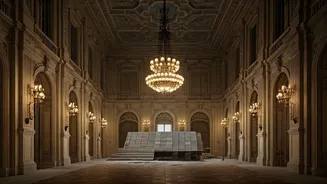









Panel Greenlights Ballroom
The National Capital Planning Commission, a key body for approving construction in the Washington D.C. region, has given the nod to the "East Wing Modernization
Project." This project, which includes a substantial ballroom, was approved by a commission chaired by a former Trump lawyer. The commission's spokesperson indicated that the recent judicial order to pause construction activities does not impede the planning and approval process itself. This decision comes just days after a federal judge attempted to block the project, underscoring a significant point of contention regarding its execution and oversight. The commission's chair emphasized that he personally reviewed all public comments, deeming many irrelevant to the commission's purview, such as funding and broader political implications. He expressed belief that the ballroom will eventually be recognized as an integral part of the White House's historic landscape.
Judicial Roadblock and Reversal
Earlier this week, U.S. District Judge Richard Leon issued a preliminary injunction, ordering a complete halt to the construction of the $400 million White House ballroom. This ruling followed a legal challenge initiated by the National Trust for Historic Preservation, with the judge asserting that the preservation group was likely to prevail in its case. Judge Leon, appointed by former President George W. Bush, stated that the President acts as a steward, not an owner, of the White House, and therefore may not possess the unilateral authority claimed for such a project. He emphasized that the White House is a national asset for all future administrations. The judge's order mandated an immediate suspension of all construction work, representing a significant setback for the administration's plans to complete this project during the current term.
Trump's Vision and Defense
President Trump has publicly defended the ballroom project, describing it as a privately financed, $400 million, 90,000-square-foot addition that will serve as a defining feature and a lasting symbol of his presidency. He expressed honor in being the first president to initiate such a "much-needed project," claiming it is both on schedule and under budget. Trump has countered the requirement for congressional approval, stating that numerous past White House improvements did not undergo such scrutiny. The project, which commenced with demolition work on the East Wing in October of the previous year, is part of a larger initiative by Trump to reshape Washington's monumental core. This broader vision includes plans for a 250-foot arch and extensive renovations to the Kennedy Center, alongside alterations to the White House Rose Garden and the Oval Office.