






Arctic Endurance Unveiled
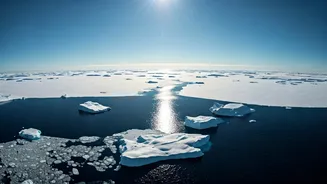
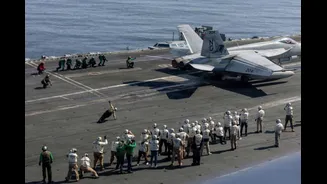
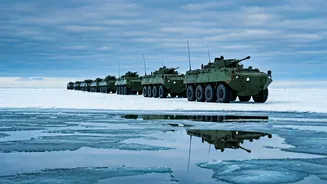
Operation Arctic Endurance, a NATO military exercise under Denmark's leadership, is currently underway, though notably without participation from the United
States. This deployment of European troops to Greenland emerges within the context of rising tensions, particularly triggered by former US President Donald Trump's expressed interest in acquiring the island, viewing it as crucial to American security, amidst growing concerns over Russian and Chinese activities in the region. Despite Trump's claims of foreign vessels near Greenland, Denmark's Arctic commander stated there were no such ships. The exercise is seen as a means to explore the feasibility of larger deployments in the future.
Europe's Defense Commitment
The European response involves various nations contributing personnel. Denmark, already maintaining around 150 troops in Greenland, leads the charge. Other nations such as Finland, which spends 2.1% of its GDP on defense, and Germany, aiming for 260,000 active troops by 2035, are bolstering their military preparedness. However, the equipment available, like the M1917 Enfield bolt-action rifles, may be unsuitable for active military action. To facilitate troop movement, the Danish Air Force is deploying C-130 Hercules transport aircraft. European powers are showing their resolve in defending Greenland by committing troops, with numbers that are somewhat modest, underscoring the continent's commitment to the island's security.
Troop Deployments Details
The commitments made by European nations vary in scale. The UK has sent one military officer, mirroring the contribution from the Netherlands. Finland and Sweden have deployed two personnel each. The total number of European troops deployed to Greenland's defense is estimated to be around 37, excluding the Danish troops. The presence of these troops, alongside the elite 14-member Sirius Dog Sled Patrol, reinforces Denmark's sovereignty in the Arctic wilderness. Simultaneously, the deployment by France, which dispatched 15 soldiers, indicates a broader European commitment, with additional reinforcements planned, highlighting a collective resolve towards defending the region.
Trump's Trade Tactics
The situation surrounding Greenland has taken a turn into trade and tariffs. Former US President Donald Trump imposed a 10% tariff on various European countries, including Denmark, Norway, Sweden, and others, with a warning of increasing it to 25%. This move led to the European Parliament pausing a major transatlantic trade agreement signed in July. Additionally, some NATO members like Poland, Turkey, and Italy have abstained from sending troops, with statements from their leaders indicating their positions on the matter. These responses highlight the complex interplay of military strategy and economic diplomacy in the ongoing situation.
Future Defense Outlook
As Operation Arctic Endurance unfolds, it serves primarily as a reconnaissance mission. However, European countries are actively increasing their military modernization efforts. France, for example, pledged an additional 6.5 billion euros over two years, aiming to double its defense budget to 64 billion euros by 2027. Poland is also working on modernizing its forces. The aim is a 500,000-strong army by 2039, planning to spend 5% of its GDP on defense in 2026. Experts say that Europe must prepare for potential threats, as the old security structures are no longer as relevant as before, and it remains to be seen if Europe can adequately protect its interests in this changing geopolitical landscape.