





Awaited Ruling Postponed
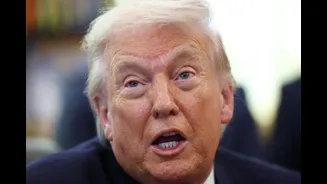
The Supreme Court chose to postpone its decision on the legality of tariffs imposed by former President Donald Trump. This postponement has kept the debate
about presidential power and trade policy alive. The core question revolved around the President's ability to unilaterally impose tariffs, using national security or emergency powers as justification. This has raised questions about potential overreach of executive power and the role of Congress in regulating such trade actions. Before the decision, a blockchain-based prediction platform, Polymarket, indicated a 73% probability that the court would rule against the tariffs. This prediction wasn't a judicial assessment, but rather a reflection of the sentiment among traders betting on the outcome.
Potential Financial Ramifications
Former President Trump had warned about the potential financial implications should the court rule against the government. In a post on his Truth Social platform, he suggested the United States might have to repay "many hundreds of billions of dollars" in tariffs already collected. Moreover, Trump had expressed concerns about additional "payback" claims from countries and businesses. He added that the United States could face "trillions of dollars" in losses if the Supreme Court ruled against his administration's broad tariff regime, implying severe economic consequences. These warnings underscored the high stakes involved in the court's decision, making the delay all the more significant.
Court's Other Decisions
While the Supreme Court delayed its ruling on the tariff dispute, it issued three other decisions. One ruling addressed the scope of constitutional protection against double jeopardy. The justices held that a single act violating two statutory provisions could only result in one conviction. This reaffirmed the principle of prohibiting multiple punishments for the same offense. Another decision focused on the issue of warrantless entry during a wellness check. The court unanimously decided that law enforcement officers could enter a home without a search warrant in emergency situations, such as a potential suicide attempt. This decision has significant implications, especially for presidential authority over trade policy, executive use of national emergency laws, and Congress’s role in regulating tariffs.