
Forest Loss Concerns
The findings from Brazil highlight the complex relationship between environmental changes and public health. Extensive deforestation is a pressing issue
with wide-ranging consequences. As forests shrink, the habitats of various species, including mosquitoes, are altered. This loss of habitat can lead to unexpected shifts in animal behavior, creating new risks. The study specifically investigated how mosquitoes are adapting to these altered environments and the potential implications for disease transmission. It underscores the urgency of addressing deforestation to mitigate these risks.
Mosquito Behavior Shift
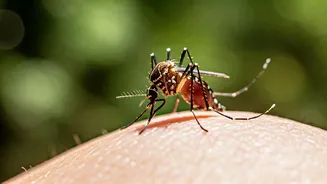
Researchers have observed a worrying trend: mosquitoes in deforested areas are more inclined to bite humans. The loss of their natural habitats forces mosquitoes to seek alternative food sources. This behavior shift is not simply about survival; it has profound implications. Mosquitoes often carry pathogens that can cause diseases like malaria, dengue fever, and Zika virus. When mosquitoes start feeding on humans more frequently, the likelihood of disease transmission increases dramatically. This study's focus on the preference for human blood emphasizes how environmental degradation can directly impact human health.
Transmission Risk Up
The change in mosquito feeding habits has a direct impact on the risk of disease transmission. As mosquitoes increasingly rely on human blood, the chances of disease spreading within human populations rise. This situation becomes more serious in areas where diseases carried by mosquitoes are prevalent. Higher mosquito-human contact increases the risk of outbreaks, potentially overwhelming local healthcare systems. This shift could lead to severe consequences, especially in regions with limited resources to combat mosquito-borne illnesses. Therefore, the study's conclusions highlight a clear and present danger linked to environmental change.
Brazil Study Details
While specific methodologies were not mentioned in this context, the Brazilian study provides a crucial insight into the effects of deforestation. The research may have involved observing mosquito behavior in areas with varying degrees of deforestation. Researchers likely collected data on mosquito feeding patterns, habitat changes, and potential disease transmission rates. The findings underscore the importance of such research in understanding the complex interactions between environmental factors, animal behavior, and human health. This study serves as a critical warning and a catalyst for further investigation.
Broader Global Impact
The implications of this research extend far beyond Brazil. Deforestation is a global problem, and its effects on mosquito behavior could be replicated in many regions. Similar shifts in mosquito feeding habits could happen in countries with significant deforestation rates. This creates a global health threat, calling for coordinated international efforts. The spread of diseases carried by mosquitoes knows no borders, and global cooperation is essential to prevent outbreaks and protect vulnerable populations. The study emphasizes the interconnectedness of environmental health and human well-being, underlining the need for worldwide action.
Preventive Measures Needed
The findings emphasize the urgency of implementing strategies to mitigate risks. Tackling deforestation is critical, and supporting reforestation efforts can help restore habitats and decrease mosquito reliance on human blood. Alongside these measures, communities can take proactive steps to minimize exposure. This may include using mosquito nets, wearing protective clothing, and applying insect repellent. Public health initiatives should focus on educating the public about the risks and providing resources to combat mosquito-borne diseases. It is a multi-faceted approach involving environmental protection, community education, and public health infrastructure.
Call to Action
The study’s findings call for urgent action to address deforestation and protect public health. This requires a collaborative effort involving governments, researchers, communities, and international organizations. Governments should enact and enforce policies to halt deforestation and promote sustainable forest management. Scientific research must continue to monitor mosquito behavior and develop innovative solutions to combat disease transmission. Communities need to be educated and supported in their efforts to reduce risks. International cooperation and resource sharing are vital to tackling this global challenge effectively. This collective response is essential to safeguarding human health and preserving the environment.