








Drone Incident Unfolds
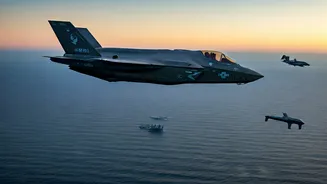
In a significant escalation of regional tensions, a United States military F-35 fighter jet was compelled to shoot down an Iranian-made Shahed-139 drone.
The unmanned aircraft was detected approaching the USS Abraham Lincoln aircraft carrier in the Arabian Sea, exhibiting behavior described by US officials as aggressive and with unclear intent. The interception occurred after de-escalatory measures by US forces operating in international waters proved unsuccessful. The F-35 fighter, operating from the carrier, engaged the drone in what was deemed an act of self-defense to protect the carrier and its personnel. Fortunately, the operation resulted in no injuries to American personnel and no damage to military equipment, according to United States Central Command spokesperson Navy Captain Tim Hawkins. This event underscores the precarious security environment in the region and the potential for miscalculation amid ongoing diplomatic initiatives.
Diplomatic Crossroads
This aerial confrontation transpired at a particularly sensitive juncture in US-Iran relations, occurring just days before scheduled diplomatic talks aimed at reviving long-stalled nuclear discussions and easing overarching tensions. US President Donald Trump had previously issued warnings that the situation could deteriorate significantly if negotiations faltered. The presence of the Abraham Lincoln carrier strike group in the region serves as a prominent symbol of Washington's augmented military posture. This deployment followed a period of internal unrest in Iran, which saw the deadliest domestic disturbances since the 1979 Islamic Revolution. While initially hesitant to intervene militarily during those protests, President Trump has since pressed for Iran to agree to new nuclear concessions. The incident casts a shadow over potential diplomatic progress, even as senior Iranian official Ali Larijani indicated arrangements for negotiations were underway, hinting at a cautious optimism for resuming talks.
Strait of Hormuz Encounter
Adding to the charged atmosphere, hours after the drone incident, US officials reported another unnerving maritime encounter in the strategically vital Strait of Hormuz, a critical global shipping lane. United States Central Command stated that vessels associated with Iran’s Islamic Revolutionary Guard Corps (IRGC) maneuvered at high speeds in close proximity to a US-flagged commercial tanker, identified as the M/V Stena Imperative. According to Captain Tim Hawkins, the IRGC boats, along with an Iranian Mohajer drone, threatened to board and seize the tanker, which was carrying American crew members. US authorities characterized this engagement as an act of intimidation, further heightening concerns over maritime security and freedom of navigation in the region and adding another layer of complexity to the already strained US-Iran relationship.