





Clash of Interests
The US Treasury Secretary, Scott Bessent, voiced disapproval of Europe's new free trade agreement with India. He stated that European leaders seemed to
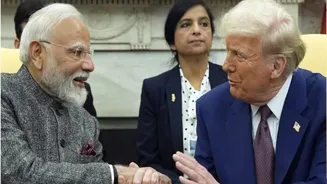
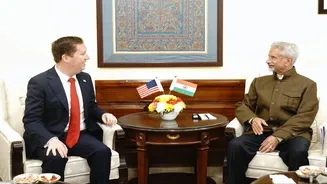
be undermining their position on the Ukraine war by putting economic interests first. According to Bessent, this stance demonstrated a contradiction. While the EU publicly supports Ukraine, it continues to engage in trade practices that, in his view, indirectly fund the conflict. This difference in approach has created a rift in the Western alliance, particularly concerning how strictly to enforce economic sanctions against Russia while managing domestic economic and political challenges. Bessent's comments followed the signing of the EU-India trade pact, a significant agreement expected to boost economic ties between both parties. This situation highlights the complicated balancing act Europe faces between geopolitics, trade, and energy security.
Oil and Sanctions
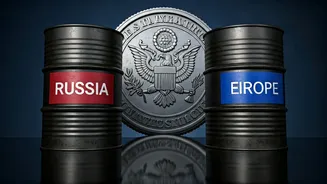
Following Russia's invasion of Ukraine, India increased its purchases of discounted Russian crude oil. The US responded by imposing a 25% tariff on India for buying the oil. However, Europe chose not to adopt similar measures. Bessent suggested that Europe's reluctance was partly because it wanted to keep trade negotiations with India on track. The situation became more complex when Europe started buying refined products made from the Russian oil India had purchased. This action led Bessent to accuse European countries of indirectly financing the conflict, despite publicly condemning it. He pointed out the apparent contradiction, suggesting Europe prioritized trade over ending the war in Ukraine. The US's actions and Bessent's statements underscore the growing divergence in approaches to sanctioning Russia and the economic interests at stake.
Energy Dependencies Examined
Bessent acknowledged Europe's need for energy imports as a factor influencing their decisions. He observed that Europe wanted cheap energy, even if it meant potentially buying sanctioned Russian oil. He presented this as a moral and strategic trade-off. This viewpoint acknowledges the difficult position Europe is in, given its heavy reliance on energy imports. The US, which could also benefit from cheaper energy, appears willing to impose sanctions while calling out the contradictory behavior of the EU. This approach highlighted a key dilemma: how to balance the need for economic stability and affordable energy with the geopolitical imperative of supporting Ukraine and isolating Russia. European officials have argued that energy security and economic stability are critical, even as they continue their support for Ukraine.