






Climate Factors Matter
Deciding whether to open or close your windows during hot summer days hinges on a few crucial environmental elements. Poras Pratap Singh, a chief interior
design consultant, highlights that outdoor temperature is paramount. If the air outside is cooler than your interior, opening windows is a natural way to dissipate heat. Conversely, if the sun is beating down and the exterior air is significantly warmer, keeping your windows shut acts as a barrier, preventing unwanted heat from seeping in. Beyond mere temperature, wind direction and available shade also play a role. Homes with excellent natural ventilation can truly benefit from an open-window policy during the cooler morning and evening hours. However, in regions prone to high humidity or intense, direct sunlight, maintaining a cool interior often means keeping windows sealed to preserve the chilled air within.
Humidity's Impact
The presence of moisture in the air, or humidity, is a critical determinant in whether open windows will truly bring relief or exacerbate indoor discomfort. Singh points out that on sweltering days with high humidity, opening windows can actually make your living space feel worse. When air laden with moisture enters your home, it can create a sticky, clammy sensation that makes it harder to cool down, potentially leading to increased sweating. In such scenarios, it's far more effective to keep windows closed and rely on air conditioning systems to manage both the temperature and the moisture levels. However, for those in drier climates, capitalizing on cooler parts of the day, like early mornings or late evenings, by opening windows can be highly beneficial. This allows cool, dry air to circulate, effectively lowering the indoor temperature without making the environment feel unpleasantly damp.
Strategic Window Timing
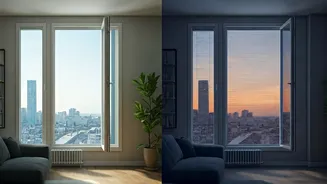
The timing of your window management is absolutely key to maximizing comfort during the summer heat. Singh strongly suggests strategically opening your windows during the early morning hours or as evening descends, periods when the external temperatures have naturally dipped. This simple practice aids in reducing your home's internal temperature organically, helping you stay comfortable without immediately resorting to air conditioning. Conversely, he advises firmly closing your windows as the afternoon progresses and midday arrives, which is typically when the sun is at its zenith and external heat is most intense. This measure is designed to act as a shield, preventing the influx of hot air and effectively trapping the cooler air that has already been established inside your home.
Fans and AC Synergy
Integrating fans and air conditioning with your window strategy can significantly enhance your home's overall comfort. When utilizing fans alongside open windows, the primary objective is to establish a cross-breeze that facilitates air movement throughout your residence. This approach is particularly effective when implemented during those cooler transitional periods of the day, such as early morning or late evening. By strategically placing fans near your windows, you can actively draw cooler outside air into your home and expel warmer indoor air, fostering a more pleasant living environment. However, when your air conditioning unit is in operation, Singh emphasizes the importance of keeping all windows and doors tightly shut. Air conditioning units are designed to cool and dehumidify the indoor air; any open windows allow warm, humid external air to infiltrate, drastically reducing the AC's efficiency and consequently increasing your energy consumption and utility bills. For optimal cooling and energy savings, ensuring a sealed environment is paramount.