




The Musk-Bot's Debut
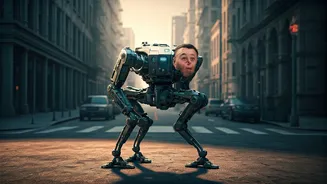
San Francisco's sidewalks recently played host to an unusual sight: a four-legged robot adorned with an eerily accurate, hyper-realistic silicone head
of tech mogul Elon Musk. This mechanical canine didn't just walk; it interacted with its environment, performing actions like waving, squatting, lifting a leg as if in greeting, and even barking back at its living counterparts. This peculiar spectacle was part of a promotional effort for artist Beeple's new exhibition in Palo Alto. The installation, titled "Regular Animals," aimed to bring digital culture into the physical realm and spark conversations about our relationship with technology and prominent figures within it.
Beeple's Artistic Vision
The "Regular Animals" exhibition, curated by the artist known as Beeple (real name Mike Winkelmann), showcases these distinctive robot dogs at the digital arts center NODE. This project is more than just a novelty; it's a deliberate artistic statement designed to provoke thought. Beeple's installations often play with themes of digital culture, celebrity, and the increasingly blurred lines between the real and the virtual. The use of familiar, iconic faces on robotic bodies challenges viewers to consider the nature of identity, fame, and the pervasive influence of technology in our lives. The exhibition itself, "INFINITE_LOOP," delves into the concept of repetition and its potential for infinite outcomes, extending this idea beyond the artist's own work to engage the audience directly.
A Menagerie of Icons
The Elon Musk-headed robot was not an isolated experiment. Beeple's "Regular Animals" project extends to include similar robotic iterations featuring the likenesses of other prominent figures. Among these are robot dogs designed with the faces of other influential personalities such as Jeff Bezos, Andy Warhol, and Pablo Picasso, as well as Beeple himself. However, it was the versions featuring Elon Musk and Mark Zuckerberg that made their way onto the San Francisco streets, capturing the attention of both human pedestrians and curious dogs. These encounters highlight the uncanny juxtaposition of technology, art, and recognizable public figures, prompting a wide range of reactions.
Engineering and Longevity
The technical underpinnings of these fascinating creations are based on Unitree Go2 quadruped robots, to which the hyperflesh silicone masks of the chosen icons are affixed. These robots are designed with a projected operational lifespan of three years. Following this period, their functional existence will cease, with their creators planning to preserve their digital 'memories.' This aspect adds another layer to the project, raising questions about digital legacy and the transient nature of even advanced technological creations. The creators' intention to continue the robots' 'lives' for a set duration underscores the artificiality and planned obsolescence inherent in such projects.
Public Reaction and Controversy
The appearance of the Elon Musk-faced robot dog on public streets quickly elicited a polarized response across social media and among onlookers. While some observers found the installation "brilliant" and "hilarious," appreciating its artistic audacity and commentary on modern culture, others expressed strong disapproval, labeling it "disgusting" and "disturbing." The legality and ethics of using public figures' likenesses without explicit consent remained a point of contention. NODE's director, Phil Mohun, stated that deploying Elon Musk into the streets was intended to inject his distinctive energy into public life, ensuring that Beeple's work would indeed "stop people in their tracks and get them talking," which it undeniably achieved.