





The Cost Imbalance
The contemporary battlefield is increasingly defined by what's termed a 'war of exhaustion,' a strategic paradigm fundamentally reshaped by the proliferation
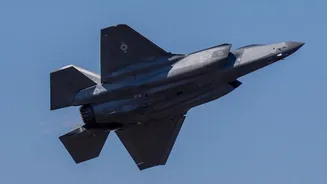
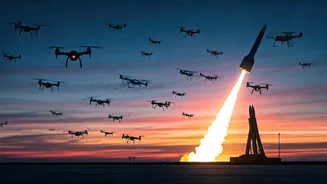
of inexpensive unmanned aerial vehicles (UAVs). Attackers can now deploy drones costing as little as $20,000 to compel defenders to expend highly sophisticated interceptor missiles, which can command prices of up to $3 million each. This stark cost disparity creates an unsustainable economic pressure on defensive forces, eroding their costly air defense inventories with persistent, low-cost threats. This strategic shift sees nations moving away from reliance on a few exceptionally expensive, high-tech aerial platforms towards a doctrine of 'precise mass' – the overwhelming deployment of numerous, affordable, and often expendable drone systems. The implications are profound, as the very cost calculus of air power is being rewritten, favoring the aggressor in a relentless attrition of resources.
Diverse Drone Arsenal
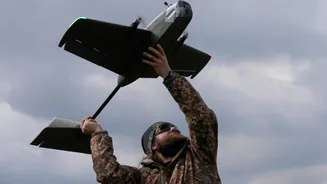
Recent conflicts highlight a diverse array of inexpensive drones employed by various global actors. Iran, Russia, and Houthi rebels widely utilize the Shahed-136, a "suicide" drone with a range of 2,500 km, perfect for swarming attacks on static infrastructure, with costs ranging from $20,000 to $50,000. Ukraine and Russia have adapted highly agile FPV (First-Person View) racing drones, costing between $500 and $1,000, often utilizing Chinese components, to serve as precision "kamikaze" weapons for targeting mobile assets or fortifications. Russia's ZALA Lancet, priced at $20,000–$40,000, is a loitering munition designed for precise strikes against high-value armor and artillery. The United States has developed the LUCAS / FLM-136, a $35,000 low-cost counterpart to the Shahed, engineered for mass deployment to overwhelm air defenses. Ukraine employs the versatile Hornet Queen (Wild Hornets) platform, a larger 17-inch FPV drone costing $2,000–$5,000, serving as a bomber, mine layer, or even a carrier for smaller drones. Russia also deploys the Gerbera, a $10,000 foam-bodied decoy, to exhaust enemy missile stocks. In response, Ukraine has developed the 'Sting' Interceptor, high-speed FPV drones at $2,500, specifically designed to engage and destroy incoming UAVs mid-flight. The Switchblade 300, used by Ukraine and the US for $6,000, is a portable, tube-launched munition for precise anti-personnel engagements. Russia and Ukraine also leverage Fiber-Optic FPV drones ($800–$2,000), which are immune to jamming due to their wired control.
Reversing Defense Economics
The core advantage of these inexpensive drones lies in their ability to drastically invert the economic equation of air defense. Drones like the Iranian Shahed-136, with an estimated cost of $20,000 to $50,000, force defenders to deploy interceptors such as the Patriot system, which can cost between $3 million and $6 million per engagement. The finite nature of these advanced interceptors becomes a critical vulnerability; for instance, the US might produce only around 600 PAC-3 interceptors in a given year, while an adversary could launch hundreds of drones in mere days, rapidly depleting these crucial stocks. Reports from recent conflicts indicate that defenders have spent over $1.4 billion in a single campaign to neutralize drone swarms that cost the attacking side less than $360 million. This creates an unsustainable expenditure pattern, where the cost of defense far outstrips the cost of the offensive weapon.
Innovative Countermeasures Emerge
In response to the escalating threat of cheap drones, military forces are rapidly developing and deploying novel, cost-effective countermeasures that bypass the need for expensive missile interceptors. Ukraine has emerged as a pioneer in "drone-on-drone" combat, utilizing small, rapid interceptor drones costing between $1,000 and $4,000 to ram or detonate near incoming enemy UAVs. The United States has also deployed advanced AI-driven drones like Merops to the Middle East for similar purposes. Traditional methods are also being revived and adapted; mobile machine-gun teams and even repurposed propeller aircraft equipped with gunmen are being employed to shoot down drones at a minimal cost. Furthermore, cutting-edge technologies such as directed-energy systems, including high-power lasers and microwaves, are under development and testing. These systems promise to neutralize drones at the speed of light, with the primary operational cost being simply the electricity consumed, offering a dramatically cheaper alternative to conventional missile defense.
Rapid Procurement Era
The current defense landscape is characterized by an unprecedented pace of innovation, a stark contrast to the decades-long development cycles of traditional military programs. The U.S. military, for example, managed to develop the FLM-136 LUCAS, a one-way attack drone costing $35,000, within an astonishing 18 months by reverse-engineering the Iranian Shahed design to address a gap in its precision strike capabilities. Ukraine has scaled its drone production to an impressive level, reportedly over 4 million drones annually, fostering an industry akin to "Silicon Valley" with rapid iteration and adaptation rather than slow, bureaucratic procurement processes. Drones are no longer exclusive assets for elite units; they are now integrated organically within every infantry squad, serving as readily available "expendable ammunition" on the front lines, fundamentally changing unit-level tactical possibilities.
Evolving Tech in 2026
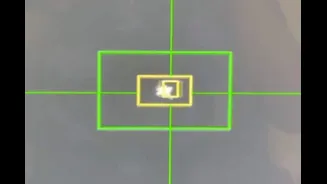
Modern drones are undergoing rapid evolution to overcome their primary vulnerability: electronic warfare (EW) and jamming. To circumvent these countermeasures, new drone designs are incorporating AI-driven machine vision, such as the TFL-1 module, which enables them to autonomously lock onto targets in the critical "last mile" of their flight. This allows them to complete their mission even if the radio control link is disrupted. Some front-line FPV drones are now being equipped with physical fiber-optic cables, rendering them entirely impervious to radio frequency interference. The operational concept is also shifting; instead of operators managing single drones, there's a move towards supervising swarms of 10 to 20 units that can coordinate their movements and operations autonomously, presenting a complex and dynamic threat to adversaries.