






Salt's Ancient Value
Salt, scientifically known as sodium chloride, has been a crucial element for human survival for thousands of years. Its unparalleled ability to preserve
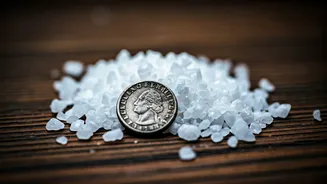
food was vital before the advent of refrigeration, allowing communities to store provisions and thrive. Consequently, civilizations often developed around salt sources and established trade routes for this precious commodity. In fact, its worth was so significant in ancient times that it was frequently equated with the value of precious metals. The Roman Empire, for instance, recognized salt's importance to the extent that soldiers and other key personnel were sometimes compensated with rations of salt. This historical practice directly contributed to the creation of the word 'salary,' which stems from the Latin term 'salarium,' meaning 'salt money.' This etymological link serves as a potent reminder of salt's foundational role in early economies and societal structures, demonstrating its influence went far beyond simple culinary enhancement.
Linguistic Ripples of Salt
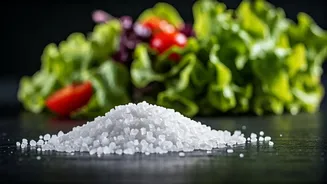
The pervasive influence of salt extends deeply into our lexicon, shaping words we use daily. The term 'salad' itself is a direct descendant of the Latin word 'sal,' meaning salt. This origin reflects the ancient practice of dressing fresh vegetables with salt and oil, a simple yet foundational culinary technique. Similarly, the 'saucer,' that small dish we often use for coffee cups or condiments, is believed to have evolved from the Latin word 'salsarium.' This term originally referred to a salt cellar or a dish specifically designed to hold salt. These direct linguistic connections illustrate how the fundamental importance of salt in ancient life has been preserved in the very language we employ, embedding its historical significance into our everyday communication and culinary traditions.
Beyond Words: Cultural Echoes
The impact of salt on our language transcends mere word origins, weaving itself into numerous idiomatic expressions that reflect its enduring cultural significance. Phrases such as 'worth one's salt' and 'take it with a grain of salt' are deeply ingrained in our vernacular, signifying a person's value or the need for skepticism, respectively. The fundamental act of seasoning food with salt is not just about enhancing taste; it represents a cornerstone of cooking, profoundly influencing the history and development of culinary arts across diverse cultures. Even in medical practices, salt played a role; its absence in Napoleon's army during the Russian campaign, impacting meat preservation and wound sterilization, contributed to severe losses. This multifaceted historical and cultural importance underscores how a seemingly simple mineral has left an indelible mark on human civilization and its linguistic expressions.