
Trade Diplomacy Weaponized
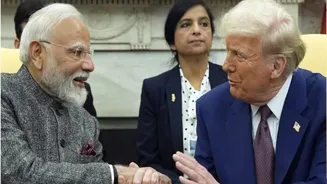
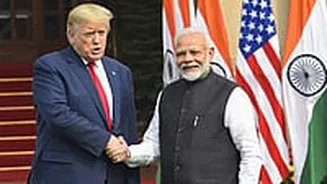
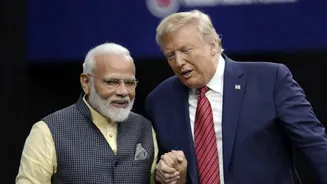
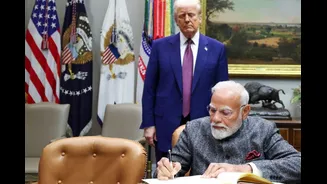
A recently announced trade agreement between India and the United States has been presented by Washington as more than just a commercial enhancement. The
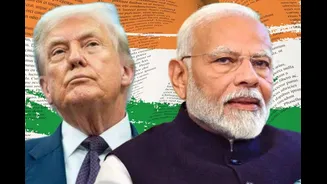
US administration has framed the deal, which offers tariff relief and market access to India, as a strategic lever to potentially weaken Russia's wartime economy. The core of this strategy involves conditioning trade benefits on India's decisions regarding its oil purchases. The underlying question experts are probing is whether this approach, as championed by former President Trump, can genuinely alter the dynamics of the conflict by curtailing one of Russia's significant energy markets. This narrative positions the trade deal as a geopolitical instrument, intertwining commercial incentives with strategic objectives on the global stage and signaling a new era where energy flows are openly leveraged in trade negotiations.
India's Russian Oil Reliance
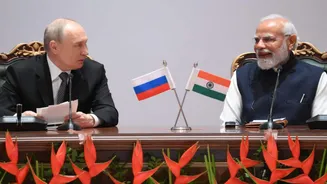
Since the conflict in Ukraine escalated in 2022, India has become a crucial destination for discounted Russian crude oil. As European nations began to distance themselves from Russian energy, Moscow redirected its supplies towards Asian markets, with India significantly increasing its imports. This shift was driven by Russia's attractive pricing and the flexibility of its payment terms, making it an appealing option for Indian refiners. For Russia, India has acted as more than just a buyer; it has been a stabilizing force for its oil exports. Even when global oil prices fluctuated or sanctions tightened, Indian refiners continued to procure Russian oil, helping to maintain Moscow's export volumes and revenue streams. This established pattern is why any suggestion of India ceasing these purchases, such as that made by former President Trump, immediately garners global attention, as it would directly impact one of Russia's most dependable energy lifelines.
US Crude vs. Russian Barrels
Energy analysts suggest that viewing the trade deal as a complete divestment from Russian oil might be an oversimplification. India's preference for Russian crude is rooted in three key factors: cost, logistical ease, and refinery compatibility. For years, a significant portion of Russian Urals crude has been processed efficiently by Indian refineries. While the United States possesses abundant oil supplies, American crude generally comes at a higher price and involves longer shipping routes. Moreover, US crude often requires blending or adjustments to Indian refining configurations, unlike the more compatible Russian grades. While India already imports American oil, a complete replacement of Russian barrels would inevitably increase costs unless global oil prices decrease or Washington provides commercial incentives beyond tariff reductions. The mention of Venezuela as a potential supplier by former President Trump adds another layer of complexity. Although Venezuelan heavy crude is compatible with Indian refineries, its production is hampered by years of underinvestment and sanctions-related challenges. Consequently, experts anticipate that India's likely approach will be one of diversification rather than an abrupt and complete switch, involving a gradual reduction in Russian oil purchases over time.
Economic Impact on Russia
Even a partial scaling back of India's oil purchases could have a noticeable effect on Russia's revenue. India stands as one of Russia's top oil consumers, and a meaningful reduction in imports would compel Moscow to either secure alternative buyers, likely at steeper discounts, or reduce its production levels. Both scenarios would exert pressure on Russia's financial income. However, Russia has demonstrated resilience in navigating sanctions by expanding sales to other markets, such as China, and by utilizing a 'shadow fleet' of tankers to circumvent restrictions. As a result, most analysts believe that while reductions in Indian purchases would indeed hurt Russia's finances, they are unlikely to cripple its economy. To genuinely end the war in Ukraine through energy pressure, as suggested by former President Trump, would necessitate a coordinated effort involving multiple major oil-importing nations, rather than relying solely on India's actions.
India's Strategic Independence
From India's perspective, the trade agreement primarily represents a pragmatic negotiation yielding tangible benefits, rather than a fundamental shift in its strategic foreign policy. New Delhi successfully secured tariff relief and expanded access to the lucrative US market at a time when global protectionism is on the rise. However, India has consistently maintained that its energy procurement decisions are guided by market forces. Indian officials have long resisted the idea of treating oil imports as political instruments, emphasizing that affordability and supply security are paramount for a nation with substantial energy needs. This stance suggests that any move away from Russian oil will be a measured, gradual process that is reversible should market conditions change. The agreement, therefore, underscores India's commitment to its policy of strategic autonomy, allowing it to pursue national interests without being rigidly bound by geopolitical alignments.
Geopolitical Signals Sent
The true significance of the India-US trade deal lies in the explicit intertwining of energy considerations with trade diplomacy. For the United States, the message is clear: access to its market now carries an expectation of strategic alignment with US foreign policy objectives. For India, the agreement demonstrates its capacity to negotiate substantial economic advantages without formally abandoning its long-standing non-aligned foreign policy stance. The signal to Russia is perhaps the most concerning, indicating that even its established partners are now willing to bargain over energy ties under Western pressure. This highlights potential limitations to Moscow's efforts at economic insulation following the Ukraine conflict. While the India-US trade deal alone will not resolve the war in Ukraine, it signifies a notable evolution in the application of global power, where trade tariffs, oil supply dynamics, and geopolitical considerations are openly integrated into negotiation frameworks. The actual impact on Russia will ultimately be determined by concrete data on shipping and refinery contracts, rather than initial headlines, and by the sustained commitment India shows to its evolving energy strategy once the immediate diplomatic spotlight fades.