









Rafale's Superiority Analyzed
The decision to acquire Rafale fighter jets was a significant move for India, diverging from the potential selections of the US F-35 and the Russian Su-57.
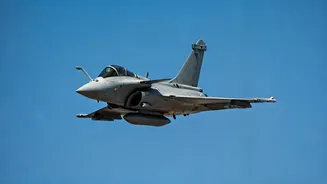
Several aspects made the Rafale a preferred choice. The Rafale's versatility, equipped with advanced radar systems, air-to-air missiles, and the ability to carry a wide range of payloads, provided India with a combat-ready platform capable of fulfilling multiple roles. It could conduct air superiority missions, ground attack operations, and reconnaissance tasks, offering a comprehensive solution for India's defense. The Rafale was perceived as a robust and capable platform for India, in contrast to the F-35, which had a different operational history. The Rafale, with its proven track record and adaptability, offered a dependable solution suited to India's unique defense requirements. This strategic choice showcased India's commitment to modernize its defense capabilities with a highly capable and adaptable fighter jet.
Geopolitical Alignment Strategy
India's choice of the Rafale also reflected its careful navigation of the complex geopolitical landscape. The decision to partner with France, a nation that has consistently demonstrated strategic autonomy in its foreign policy, presented a beneficial arrangement for India. The deal with France allowed India to diversify its defense suppliers, thus minimizing its dependence on any specific country. This strategic move facilitated flexibility in India's foreign policy approach, permitting it to build strong relationships with multiple countries and avoid being excessively aligned with any single nation. Such a multifaceted strategy helped India safeguard its strategic interests while positioning itself for increased influence in regional and global affairs. This decision demonstrated India's pragmatic approach to international relations and its drive to reinforce its strategic autonomy.
Cost, Time Considerations
Beyond its technological prowess and geopolitical advantages, the Rafale deal was also deemed advantageous due to considerations regarding cost and schedule. While specifics vary, the overall economic structure of the Rafale agreement was seen as favorable. When the entire package, which included maintenance, training, and the transfer of technology, was carefully examined, it provided good value for the defense capabilities India was acquiring. Furthermore, the decision to go with the Rafale was driven by a need for timely acquisition. The Rafale's availability for rapid deployment and its proven integration into existing defense systems helped India boost its aerial capabilities more quickly than might be possible with alternative choices. This was crucial for keeping up with the challenges posed by the strategic environment in the area. These factors, taken together, made the Rafale an appealing choice for the Indian Air Force, as it balanced capability, cost-effectiveness, and timely delivery.