





Trade Deal Unveiled
In a significant diplomatic development, India and the United States have finalized a new trade agreement. Following extensive negotiations, US President
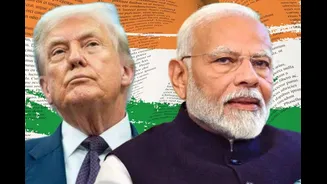
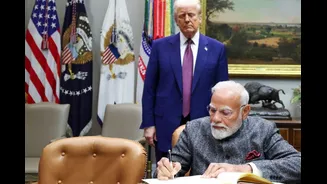
Donald Trump announced a substantial reduction in tariffs on Indian imports, lowering them from a previous 25% to 18%. This adjustment, effective immediately, was a direct outcome of a recent conversation between President Trump and Indian Prime Minister Narendra Modi. While the full scope of the agreement is still being detailed, the reduction in US tariffs represents a considerable win for Indian exporters. President Trump also indicated that India would reciprocate by eliminating its own tariffs and non-tariff barriers on many American products, aiming for a zero-tariff environment for a range of US goods, although specific timelines and formal schedules for these reductions are yet to be publicly disclosed. This move marks a crucial step in recalibrating the trade relationship between the two nations, aiming to foster greater economic exchange and cooperation.
Market Access Gains
The reduction in US tariffs to 18% significantly enhances market access for Indian exporters, easing cost barriers and improving competitiveness in the vast American market. Key sectors poised to benefit include textiles and apparel, where the US is a major destination for Indian exports, accounting for approximately 28% of the total. Lower duties are expected to help Indian firms regain pricing power and overall competitiveness. The seafood industry, particularly shrimp suppliers to the US, will also see improved export prospects. Furthermore, the automotive and auto ancillary sectors, as well as manufacturers of chemicals and consumer goods, stand to gain from reduced trade costs, potentially solidifying India's position in global supply chains and facilitating easier entry for products like packaged foods. In return, India has pledged to open its market further to US exporters, with agreements to lower import duties on American products across sectors such as energy, technology, agriculture, and coal.
Geopolitical Undertones
Beyond the immediate economic implications, the trade deal carries significant geopolitical undertones, particularly concerning India's energy imports. President Trump's assertion that India would cease purchasing Russian oil and instead increase energy imports from the US and potentially Venezuela was framed as a measure to contribute to resolving the Russia-Ukraine conflict. The US had previously imposed a 25% tariff on Indian goods specifically linked to India's purchase of Russian crude oil, effectively doubling India's overall tariff burden. The removal of this additional tariff was reportedly tied to India's commitment to curb these Russian oil purchases. However, it is crucial to note that the Indian government has not explicitly confirmed its agreement to halt Russian oil imports, with Prime Minister Modi's public statements focusing primarily on the tariff reductions. This divergence highlights the delicate balancing act India navigates in its foreign policy and trade relations.
Diplomatic Dynamics
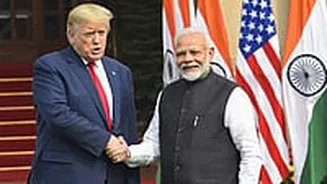
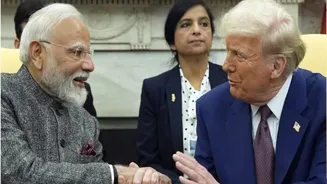
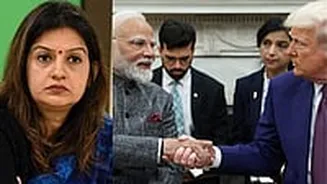
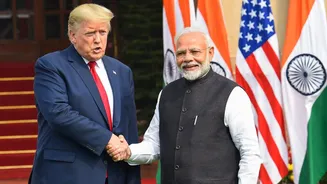
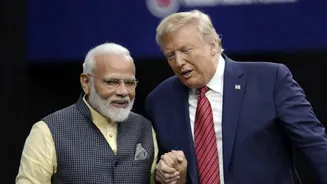
The announcement of this trade deal was notably shaped by the personal relationship between US President Donald Trump and Indian Prime Minister Narendra Modi. President Trump repeatedly emphasized his personal friendship and respect for PM Modi as the driving force behind the agreement, highlighting their strong personal rapport. Sergio Gor, the US Ambassador to India, also played a key role, acting as a trusted liaison and signaling Washington's intent to foster closer ties. Gor's appointment and his active engagement in facilitating the deal underscore the administration's focus on hands-on diplomacy. The framing of the deal as a product of direct personal conversation between the leaders, rather than purely bureaucratic negotiation, underscores the influence of their trust and mutual respect in navigating complex trade discussions, especially during a period of existing trade tensions and geopolitical challenges.
Market and Political Reactions
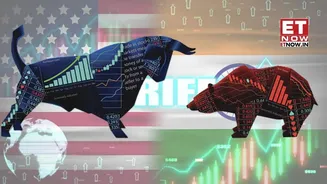
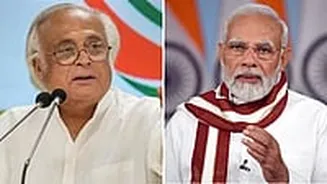
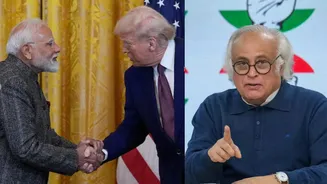
The immediate aftermath of the trade deal announcement saw a positive surge in Indian financial markets, with equity benchmarks opening significantly higher as investor sentiment was boosted by the breakthrough. The Sensex and Nifty both experienced substantial gains. In the US, officials like Under Secretary of State Jacob Helberg welcomed the deal, anticipating deepened industrial collaboration and momentum for joint projects in critical areas like minerals and technology. Indian ministers, including External Affairs Minister S Jaishankar and Union Home Minister Amit Shah, also expressed optimism, highlighting the potential for job creation, growth, and innovation. However, the Indian opposition voiced concerns, with leader Jairam Ramesh suggesting that Trump held leverage over PM Modi and criticizing the pattern of India learning about government actions through US announcements. Ramesh coined the term 'Trump-nirbharta' to describe this perceived dependence on US pronouncements.