





French Onion Soup
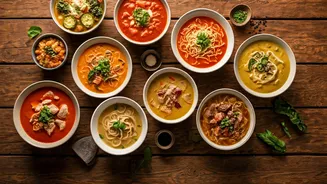
Beginning the soup journey with a French classic, French Onion Soup is renowned for its rich flavour. It typically features caramelised onions simmered
in beef broth, often topped with a crusty crouton and melted cheese. This soup's popularity stems from its balance of sweet onions, savoury broth, and the satisfying crunch of the bread and cheese. The caramelisation process, crucial to the soup's character, involves slow cooking the onions until they turn a deep brown and develop a sweet, complex taste. Served hot, this soup is a hearty starter or light meal, known for its comforting warmth and depth of flavour. The combination of ingredients creates a symphony of textures and tastes, making it a beloved dish worldwide and a symbol of French culinary tradition. Its origins trace back to simple peasant meals, evolving into the refined dish we know today.
Tom Yum Soup
Next, travel to Thailand to savour Tom Yum Soup, a quintessential Thai soup bursting with aromatic herbs and spices. This hot and sour soup blends lemongrass, galangal, kaffir lime leaves, chilies, and fish sauce to create a complex flavour profile. Often, it contains shrimp, mushrooms, and other vegetables. The soup's balance of sour, sweet, salty, and spicy notes is a key element of its appeal. The vibrant ingredients are carefully selected to provide both flavour and fragrance. The broth's base, typically made from chicken or vegetable stock, allows the various spices and herbs to shine. Tom Yum is more than just a dish; it reflects Thailand's culinary philosophy, where harmony and balance are central. It is a popular street food and a staple in Thai households and restaurants, enjoyed for its refreshing and invigorating qualities.
Ramen's Global Reach
Moving to Japan, Ramen takes centre stage as a beloved noodle soup. Ramen's versatility lies in its various regional styles, each with unique broths, toppings, and noodle types. The broth can range from tonkotsu (pork bone) to miso or shoyu (soy sauce) based, offering endless flavour combinations. Noodles can be thin, thick, straight, or curly, adding diverse textures. Common toppings include chashu (braised pork belly), soft-boiled eggs, nori (seaweed), and green onions. Ramen's appeal transcends cultural boundaries, with variations found worldwide. Its roots lie in Chinese cuisine, evolving into a Japanese staple. It has become a symbol of comfort food, with each bowl offering a personalised and delicious experience. The attention to detail and balance of ingredients make Ramen an unforgettable culinary experience.
Gazpacho's Cool Delight
From Spain comes Gazpacho, a refreshing cold soup perfect for warm weather. Traditionally made with blended raw vegetables like tomatoes, cucumbers, peppers, and onions, it is seasoned with olive oil, vinegar, and sometimes garlic. Its appeal lies in its simplicity and the fresh flavours of the ingredients. The soup's origins are rooted in Andalusia, where it was originally a simple peasant dish. Gazpacho is a testament to how humble ingredients can create a vibrant and satisfying dish. It is a perfect example of a healthy and refreshing meal, offering a light yet flavourful experience. Variations exist across Spain, showcasing local ingredients and preferences. Served chilled, it offers a respite from the heat, making it a popular choice during summer.
Minestrone's Bounty
Minestrone, an Italian vegetable soup, embodies the concept of a hearty meal. It is a rich soup with vegetables, pasta, and often beans, all simmered in a tomato-based broth. The vegetables vary depending on the season, making each batch unique. Its core is in the use of fresh produce. Minestrone's history reflects Italy's culinary tradition, using whatever ingredients are available. From humble origins, it has become a staple, celebrated for its flexibility and nutritional value. The variety of ingredients provides a wide array of textures and flavours. This soup is a comforting, filling meal that can be customised to individual tastes and regional variations. It often symbolises warmth and simplicity in Italian cuisine, making it popular worldwide.
Pho's Aroma
Heading to Vietnam, Pho is a fragrant noodle soup, known for its complex broth, rice noodles, herbs, and thinly sliced meat, typically beef or chicken. The broth simmers for hours, with aromatic spices like star anise, cinnamon, and cloves. The fresh herbs and sprouts are added at the end, providing a burst of freshness. Pho's appeal is in its balance of flavours and textures. From the tender noodles to the fragrant broth, each element contributes to a satisfying meal. The practice of serving the soup with garnishes allows diners to customise their experience. Pho represents Vietnamese cuisine's focus on freshness and flavour, making it a popular choice. It is a culinary icon, enjoyed for its aromatic and comforting qualities, reflecting the depth of Vietnamese culinary traditions.
Borscht's Colourful Hue
From Eastern Europe, Borscht stands out with its vibrant red colour. This beet-based soup typically includes vegetables such as cabbage, potatoes, and carrots. It often has meat, such as beef, and is seasoned with vinegar and herbs. The combination of earthy beets, tender vegetables, and savoury meat makes Borscht a hearty and comforting dish. Its origins are in Eastern European cultures, with regional variations using various ingredients and cooking methods. Its depth and complexity are appreciated during colder months. Borscht is often served with a dollop of sour cream or a sprinkle of fresh dill, adding a creamy and fresh element. The soup symbolises tradition and communal gathering, offering a nutritious and flavourful experience. Its vibrant appearance and bold flavours make it a standout dish.
Miso Soup's Simplicity
Back in Japan, Miso Soup provides a lighter, more delicate culinary experience. This soup is made with dashi (fish or seaweed broth) and miso paste, a fermented soybean product. It often includes tofu, seaweed (wakame), and green onions. Its simplicity and balanced flavours make it a daily staple in many Japanese households. The umami-rich broth and the soft textures of the tofu and seaweed create a harmonious experience. Miso Soup is a symbol of Japanese culinary philosophy, focusing on simplicity and natural flavours. It often accompanies meals, cleansing the palate and enhancing the overall dining experience. Its health benefits are widely celebrated, with its probiotic qualities being a focus. This soup is a testament to the art of using simple ingredients to create something truly delicious.
Lentil Soup's Warmth
Lentil Soup, found across various cultures, is known for its heartiness and nutritional value. Lentils form the base, with vegetables like carrots, celery, and onions, often combined with spices like cumin, coriander, and turmeric. Its preparation is simple, often simmered until the lentils become tender. The soup's popularity comes from its affordability, ease of preparation, and high nutritional content. It is a staple in many households, providing a filling and healthy meal. Lentil Soup is a versatile dish, easily adaptable to regional preferences. From the Middle East to South Asia, variations include different spices and ingredients. It represents simplicity and nourishment, offering a comforting and wholesome meal that fits various dietary requirements.
Chicken Noodle's Comfort
Finally, Chicken Noodle Soup is a universally loved comfort food, often associated with home and care. It typically includes chicken, noodles, and vegetables in a chicken broth. The combination of tender chicken, soft noodles, and flavourful broth creates a comforting and familiar taste. Chicken Noodle Soup is often considered a remedy for colds and illnesses, thanks to its comforting warmth. Its origins trace back to various cultures, evolving into the familiar version enjoyed today. The soup symbolises care and well-being, often prepared for loved ones. Its simplicity and versatility make it adaptable to many tastes. It is a dish that evokes nostalgia and provides a sense of warmth, offering a comforting experience.