



An Impressive Ascent
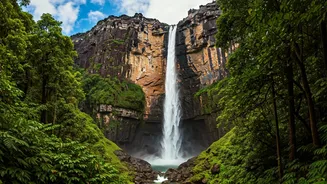
Angel Falls, a staggering natural phenomenon, plunges from a height of approximately 1,000 meters, making it the highest uninterrupted waterfall on Earth.
Its sheer magnitude sets it apart from other waterfalls globally, creating a spectacle that is both humbling and awe-inspiring. This waterfall showcases the impressive power and beauty of nature, drawing in visitors worldwide who are mesmerized by the force and elegance of the falling water. The towering height is a testament to the Earth's natural wonders, which have evolved over millennia.
Hidden in Venezuela
This breathtaking waterfall is tucked away in the Gran Sabana region of Venezuela, within the Canaima National Park. Its location, far from populated areas, contributes to its untouched beauty and allure. Being situated deep within the Venezuelan jungle means that access is mainly via aircraft, making the journey an adventure in itself. The remote setting of Angel Falls allows the surrounding ecosystem to thrive, creating an unspoiled natural habitat that enhances its overall appeal and protects it from the disturbance of human activity.
UNESCO World Heritage
Angel Falls has earned the prestigious title of a UNESCO World Heritage site, underscoring its immense global importance. This recognition highlights its outstanding universal value, acknowledging its significance to humanity and the need for its preservation. This special designation helps to safeguard the waterfall and its surrounding environment for future generations. The UNESCO title brings global awareness and resources, ensuring the preservation of this unique natural landmark and supporting sustainable tourism practices.
A Waterfall's Flow
The flow of water in Angel Falls is largely dependent on the rainy season, with peak flows observed from June to December. During these months, the waterfall's volume is at its maximum, creating an even more dramatic display. The water descends from the summit of Auyán-Tepuí, a unique table-top mountain, contributing to the waterfall's continuous and impressive flow. The water's movement, from its origin to the plunge, highlights the dynamics of natural forces, shaping the natural landscape around it.
A Historical Name
Angel Falls' name pays tribute to the American aviator, James Crawford Angel, who rediscovered the waterfall in 1933. Prior to Angel's discovery, the indigenous Pemon people knew about the waterfall, calling it 'Kerepakupai Meru'. Angel's aviation expeditions brought the waterfall to the world's attention, leading to its current, globally recognized name. His remarkable explorations have ensured that Angel Falls will forever be associated with adventure and discovery, becoming a symbol of exploring the unknown and pushing boundaries.
Tourism and Adventure
Tourism has become a significant factor around Angel Falls. Tourists, keen to experience its grandeur, travel to the site primarily by air and river. The journey to the falls presents an incredible adventure with views of the thick jungle and the unique tepui formations. Sustainable tourism practices are important to make sure the environment remains unspoiled, providing future generations the chance to enjoy this natural wonder. Visitors contribute to the local economy while appreciating the natural beauty of the destination.
Surrounding Landscape
The surroundings of Angel Falls are as stunning as the waterfall itself. It is situated within the Canaima National Park, a land characterized by diverse landscapes. The area features the distinct tepuis, which are table-top mountains unique to this region. These ancient geological formations give the area an otherworldly appearance. The environment has a variety of flora and fauna, enhancing the unique biodiversity. This combination makes Angel Falls a visually stunning and naturally rich environment.