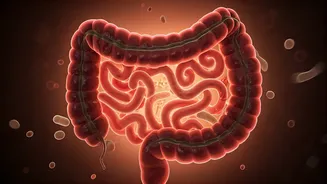







Fibre's Double-Edged Sword
The popular notion that more fibre equates to superior gut health is only partially accurate, according to Dr. Sayajirao Gaikwad, a homoeopathic practitioner.
While fibre is undeniably beneficial for digestion, consuming excessive amounts, particularly without sufficient hydration, can trigger discomfort. The recommended dietary allowance serves as a minimum target, with men needing at least 38 grams and women 25 grams daily. However, increasing this intake by an additional 25 to 40 grams can significantly improve stool frequency and aid in better glycemic control, leading to softer, easier-to-pass stools and alleviating straining during bowel movements. This nuanced perspective challenges the simplistic 'more is better' mantra often found online, highlighting the importance of understanding individual limits and proper consumption strategies for reaping fibre's full benefits without adverse effects.
When Too Much Backfires
Exceeding a daily fibre intake of 40 to 50 grams, especially without careful planning, can lead to unintended consequences for your digestive system. Common side effects include pronounced bloating, uncomfortable abdominal distension, and excessive gas production. A critical factor often overlooked when increasing fibre consumption is hydration. Fibre functions by absorbing water to create soft, bulky stools that facilitate smooth transit through the digestive tract. When water intake is insufficient, the fibre cannot properly hydrate, resulting in stools that are hard, difficult to pass, and can actually worsen constipation. To counteract this, a daily water intake of 2-3 litres is strongly advised when significantly increasing dietary fibre. This ensures the fibre can perform its intended function of promoting regularity and comfort.
Hydration: The Missing Link
The cornerstone of managing a high-fibre diet effectively is ensuring adequate water intake. Fibre relies on water to swell and form soft, manageable stools, which are essential for regular and comfortable bowel movements. Without sufficient hydration, the fibre can become compacted, leading to hardened stools, a sluggish digestive process, and an exacerbation of constipation rather than its relief. Therefore, aiming for a daily intake of 2 to 3 litres of water is paramount. This fluid intake allows the fibre to perform its intended role, transforming from a potential irritant into a beneficial digestive aid. This simple yet crucial step ensures that increased fibre consumption supports, rather than hinders, gut health and overall well-being.
Fibre Types and Absorption
It is vital to recognize that not all dietary fibres function identically; the type of fibre consumed plays a significant role in its impact on the body. Soluble fibres, found in foods like oats and psyllium, are known to improve the consistency of stools, making them softer and easier to pass. In contrast, insoluble fibres, such as those in wheat bran, primarily add bulk to the stool. When increasing fibre intake, particularly fermentable fibres, an individual's gut may experience worsened symptoms. Moreover, excessively high fibre consumption can potentially interfere with the absorption of essential minerals like zinc and iron. To mitigate these risks and ensure the body can tolerate increased fibre, it is advisable to gradually increase intake, maintain thorough hydration, and monitor your gut's response.