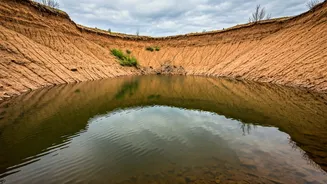







The Sinkhole Story
The occurrence of sinkholes is a natural phenomenon often associated with specific geological conditions. Sinkholes emerge when the ground's surface collapses,
creating a depression. This can happen gradually or suddenly. Sinkholes arise because of the erosion of underlying rock layers, like limestone or other soluble rocks. When these rocks dissolve over time due to groundwater or acidic conditions, they form underground caverns. If the roof of these caverns becomes too weak to support the weight above, it collapses, resulting in a sinkhole. The size and severity of sinkholes can vary greatly. Factors that influence sinkhole formation include the type of underlying rock, the amount of rainfall, and human activities like groundwater pumping, which can destabilize the ground. Therefore, understanding sinkholes requires acknowledging their geological context and environmental influences.
Why It's Risky
Drinking water from sinkholes can pose considerable health risks due to potential contamination. Even if the water appears clear, it may harbor dangerous bacteria, viruses, and other harmful substances. Contamination can stem from various sources, including sewage, agricultural runoff, industrial waste, and naturally occurring pollutants in the ground. Waterborne pathogens, such as bacteria like E. coli and Salmonella, and viruses can cause severe gastrointestinal illnesses, including diarrhea, vomiting, and fever. In addition to biological contaminants, sinkhole water might contain chemical pollutants like heavy metals or pesticides, posing long-term health hazards. The unpredictable nature of sinkhole water, coupled with the lack of reliable treatment, underscores the critical need to avoid consuming it. Prioritizing access to safe, treated water sources is essential for safeguarding public health, especially in areas where sinkholes are common.
Public Health Warning
Authorities issue public health warnings when they identify hazards in water sources like sinkholes, emphasizing the immediate dangers. The presence of harmful bacteria or chemical pollutants in sinkhole water necessitates these warnings. These advisories often instruct the public to avoid drinking or using the water for any purpose. Public health warnings might be issued when routine water testing reveals contamination. The warnings usually outline the health risks associated with exposure, and how to mitigate those risks. They may provide instructions on how to treat the water before use, such as boiling it for a specified time or using appropriate water filtration methods. Local governments and health agencies are responsible for issuing and disseminating public health warnings. It’s crucial that the public heeds these warnings, so they can protect themselves from waterborne illnesses and other health concerns that sinkhole water can bring.