





The Viral Spark
A seemingly simple online exchange about Bengali sweets quickly escalated into a passionate debate concerning the distinct identities of popular Indian
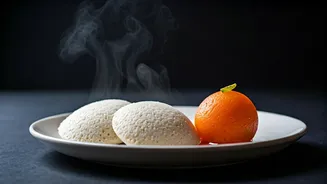
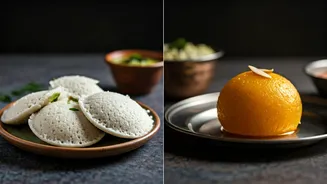
dishes, specifically idli and rasgulla. What began with a user questioning how to describe the taste of sweets like Misti Doi and Nolen Gurer Rosogolla to outsiders, soon drew the attention of a fellow user who controversially described rasgulla as merely 'an idli dipped in sugar syrup,' labelling it 'the most overrated dessert.' This remark, trivializing a beloved sweet, caught the internet's eye and prompted a significant intervention from Congress MP Shashi Tharoor, setting the stage for a more nuanced exploration of what these foods represent beyond mere sustenance.
Tharoor's Eloquent Defense
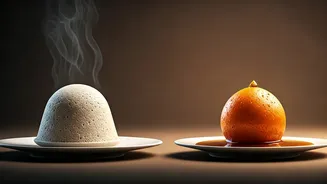
Shashi Tharoor, known for his articulate responses, entered the fray with a robust defense of the humble idli, reframing the comparison as more than a culinary gaffe. He argued that equating rasgulla with idli constitutes a 'profound cosmological misunderstanding.' Tharoor meticulously detailed the fundamental differences, highlighting that rasgulla is derived from chhena – the delicate curd of milk – while idli is crafted from a meticulously fermented batter of parboiled rice and black gram. He elaborated that their compositions belong to 'entirely different kingdoms,' emphasizing their distinct origins and preparation methods. This precise breakdown aimed to educate and defend the unique integrity of each dish, elevating the discourse from a simple taste comparison to an appreciation of culinary science and heritage.
Culinary Philosophies Unveiled
Beyond mere ingredients, Tharoor articulated how rasgulla and idli embody divergent culinary philosophies. He described rasgulla as an 'airy, spongy lattice' designed to absorb sweet syrup, contrasting it with the idli's identity as a 'dense, wholesome, steamed matrix' of complex carbohydrates and proteins. The differences extend to their taste, consistency, structural integrity, and even their 'existential purpose.' Tharoor passionately defended the idli not as a 'bland cake' but as a 'masterclass in biotechnology,' celebrating the complex science of its fermentation. This deep dive showcased how each dish is a product of distinct cultural techniques and culinary aspirations, far from being interchangeable.
The Science of Fermentation
Tharoor's assertion that the idli is a 'masterclass in biotechnology' is scientifically grounded, according to experts. The perfection of an idli hinges on the intricate process of fermentation, where a delicate balance of wild yeast and bacteria transforms the rice and lentil batter. This ancient practice, mastered long before modern scientific understanding, serves as a vital tool for food preservation and nutrient enhancement in tropical climates. The fermentation of urad dal and rice encourages the growth of beneficial microbes like Leuconostoc mesenteroides and Lactobacillus bulgaricus. These microorganisms break down complex starches and neutralize anti-nutrients, simultaneously producing essential B-vitamins and creating a light, digestible, and nutrient-rich food.
Cultural Significance and Identity
The intense reactions to the idli-rasgulla comparison stem from the deep-seated emotional and regional significance attached to Indian food. Experts note that such comparisons, while seemingly trivial, can feel like an erasure of distinct technical and cultural labor embedded within these dishes. For instance, the idli is seen as the 'soul of the South,' a testament to patience and meticulous preparation, while the rasgulla represents a significant historical advancement in confectionery for communities in Eastern India. Food acts as a powerful form of 'cultural shorthand,' carrying with it collective memories and regional pride. When iconic dishes are trivialized, it touches upon a community's heritage and sense of identity, highlighting how food is often the last thing people abandon during assimilation.
Achieving Idli Perfection
The seemingly simple idli requires a precise alignment of multiple factors to achieve its characteristic softness and airy texture, making its perfection a nuanced culinary challenge. The primary determinant of success is the fermentation process; any deviation can result in dense, rather than light and fluffy, idlis. Beyond fermentation quality, achieving the ideal idli depends on the correct ratio of rice to lentils, the grinding texture of the batter, proper aeration, and precise steaming time. Even subtle variations in ambient temperature or the specific microflora present can dramatically influence the final outcome. This intricate interplay of elements underscores why homemade idlis can differ significantly from those prepared in professional settings, highlighting the skill and attention to detail involved.