




Quantity is King
When it comes to cooking oils and their impact on health, the prevailing belief that specific oil types hold the key to wellness often overshadows a more
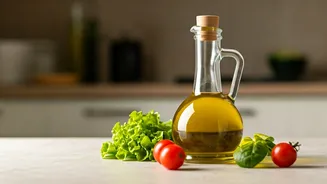
fundamental truth: the quantity consumed and the method of usage are paramount. For an average Indian family of four, a monthly oil consumption ranging between 2.5 to 3.5 litres, encompassing all forms including ghee, butter, tempering oils, and the 'hidden' oils in fried delicacies, is considered an appropriate benchmark. On a daily basis, an individual should aim to limit visible fat intake to a mere 4 to 6 teaspoons. This emphasis on moderation challenges the common practice of blindly following trends based on social media claims about specific oils, shifting the focus towards mindful consumption and application.
Unpacking Oil Choices
While the emphasis is on quantity, understanding the general properties of different oils remains relevant, especially for individuals with pre-existing conditions. Unsaturated oils, such as olive, canola, rice bran, soybean, and sunflower oils, are generally recognized for their heart-friendly attributes. Conversely, saturated fats found in ghee, butter, palm oil, and coconut oil should be consumed sparingly or substituted with healthier alternatives. Scientific research, including randomized clinical trials, has demonstrated that substituting saturated fats with polyunsaturated fats can significantly reduce cardiovascular health risks, potentially by as much as 30%. Therefore, while not the sole determinant of health, making informed choices about oil composition can complement a low-quantity, wisely-used approach.
Smart Cooking Tactics
Beyond just the type and amount, the context of oil usage in cooking plays a crucial role in its health implications. For instance, using a heart-healthy oil like olive or mustard oil becomes counterproductive if the cooking method involves deep-frying, effectively turning the pan into a 'swimming pool' of oil. Key questions to consider include whether the oil is predominantly saturated or unsaturated, its intended use for tempering versus deep-frying, and whether it reaches its smoke point during cooking. Repeatedly heating the same oil is also detrimental. Ultimately, a holistic approach that considers the entire dietary pattern, including baked goods, snacks, and restaurant meals, is essential. Blaming the oil alone for health issues while overlooking excessive consumption of other high-fat foods is a common pitfall.
Daily Fat Guidelines
Adhering to recommended daily fat intake guidelines is fundamental for maintaining good health. Indian dietary recommendations suggest that visible fat and oil consumption should fall within the range of 20 to 30 grams per person daily, with adjustments for individual activity levels and overall diet. A practical rule of thumb for most households is to limit visible fat intake to approximately 4 to 6 teaspoons per day. For cooking oils specifically, this translates to a daily limit of 2 to 3 teaspoons. Even when incorporating fats like butter or ghee, the daily allowance should not exceed 1 to 2 teaspoons. Extrapolating this, an individual's monthly oil requirement should be around 600 to 900 ml, reinforcing the 2.5 to 3.5 litre per month benchmark for a family of four.