




Introduction: The Commute
In numerous bustling Asian cities, the daily commute is far more than a simple trip; it's a test of endurance and a significant time commitment. This article
explores cities where the journey to and from work consumes a substantial portion of an individual's day, impacting various facets of life. The problem isn't uniform; it varies significantly from one place to another. Different elements, like the state of public transport, the number of vehicles on the road, and urban planning decisions, influence how long people spend commuting. The objective of this report is to evaluate the cities that stand out in terms of commuting durations, presenting a glimpse into the daily struggles and inventive methods used to deal with such constraints. The study looks at how these extended commutes influence city life, from the economy to personal well-being. It also explores some solutions that are being adopted to improve the travel experience for residents.
Factors at Play
Several intertwined factors contribute to lengthy commutes in many Asian cities. Population density plays a critical role, as higher concentrations of people in urban areas inevitably lead to traffic congestion, especially during peak hours. The quality and availability of public transportation are also significant; cities with underdeveloped or inadequate public transit systems often force residents to rely on private vehicles, thereby exacerbating traffic. Furthermore, the infrastructure of a city, including road networks, bridges, and tunnels, directly affects traffic flow. Outdated infrastructure can cause bottlenecks and delays. Urban planning decisions, such as the layout of the city and the placement of residential and commercial zones, also impact commutes. If residential areas are far from work areas, travel times will naturally be extended. Consequently, a complex interaction between population, transportation, infrastructure, and urban design shapes the commuting experience in major Asian cities.
City 1: Tokyo, Japan
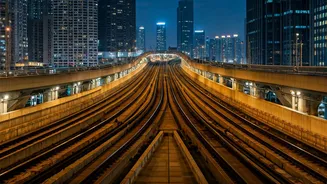
Tokyo, despite being known for its efficient public transit, presents considerable commute times for many residents. Although the city boasts an extensive railway network and subway lines, the sheer volume of commuters and the vast distances between locations can cause travel times to be lengthy. Hundreds of thousands of people travel across the city during rush hour. Congestion on roadways and a heavy reliance on public transport further contribute to the total commute time. Consequently, many Tokyo residents spend a substantial amount of time on their daily commute. Despite investments in improving the transport system, balancing the growth in population and economic activities with the available infrastructure remains a constant challenge. This situation underscores the need for continuous improvements to the transport infrastructure and efficient planning to manage the city's complex traffic patterns.
City 2: Seoul, South Korea
Seoul, a dynamic metropolis, faces similar challenges with commute times, primarily due to dense urban sprawl and a high number of commuters. Although Seoul has a well-developed subway and bus network, the concentration of people in the city necessitates a large number of vehicles on the roads during peak hours. This results in heavy traffic, which directly affects commute times. Moreover, the layout of Seoul, with commercial and residential areas often separated, adds to the travel distance for many residents. The city has invested in expanding its public transit system, but managing congestion remains a top priority. The city continues to explore smart transport solutions to reduce traffic, improve traffic flow, and offer the quickest routes for commuters. Improving efficiency is a crucial step in maintaining Seoul's appeal and enhancing the quality of life for its inhabitants.
City 3: Beijing, China
Beijing's expansive size and massive population contribute to long commutes for many residents. While the city has invested heavily in its public transport system, including subway lines and bus networks, the scale of Beijing presents significant challenges. The distance between different areas of the city, coupled with the sheer number of vehicles on the roads, often leads to traffic bottlenecks and delays. Commuting times also vary greatly based on the location. Beijing's urban development, with sprawling residential areas and commercial zones, further contributes to the length of commutes. Addressing Beijing's congestion requires continuous investments in public transit infrastructure. Urban planning improvements and traffic management strategies are essential to easing traffic flow and reducing travel times for its millions of commuters.
City 4: Shanghai, China
Shanghai, a global economic hub, encounters substantial commute times due to its high population and congested traffic. With a huge population and a high concentration of commercial activities, traffic volume is high, especially during peak times. Although Shanghai has a comprehensive subway system and an extensive bus network, the volume of commuters often leads to crowded conditions and extended travel times. The city's growth, with new residential areas often located far from the main business districts, adds to the commute times. Shanghai continues to prioritize improvements to its public transport infrastructure. Investment in new metro lines and road networks aims to alleviate congestion. Using technology and intelligent traffic management systems remains crucial for improving the city's transport efficiency and the lives of its inhabitants.
City 5: Bangkok, Thailand
Bangkok is known for its notorious traffic congestion, significantly impacting commute times for residents. Bangkok's transportation woes stem from a combination of inadequate public transport infrastructure and excessive reliance on private vehicles. The existing public transit options, including the BTS Skytrain and MRT subway, do not fully cover the city's vast area, forcing many people to travel by road. Furthermore, the layout of Bangkok, which lacks efficient road networks and often features bottlenecks, compounds the problem. The constant traffic jams and the lack of alternative routes result in extended commutes. The city is making efforts to expand its public transport networks, but the challenge of reducing congestion is a persistent concern. Streamlining traffic, and investing in new transit solutions, are essential steps to improve the commuting experience for Bangkok's citizens.
City 6: Manila, Philippines
Manila is another city in Asia where traffic congestion significantly impacts the daily commute. The city faces infrastructure challenges, as road networks struggle to handle the high volume of vehicles. Public transport options are often overcrowded and inadequate. Moreover, the growth of the city and its commercial activities has outpaced the development of effective transport solutions, resulting in extended commute times. Manila's urban layout and the separation of residential and business zones also contribute to lengthy commutes. Overcrowded roads are the main reason for these difficulties. The government is working to improve public transportation and alleviate traffic. These improvements are critical to improving the quality of life for Manila's residents and promoting economic progress.
Cities 7-10: Others
Other Asian cities also struggle with long commute times. Jakarta, Indonesia, known for its traffic, faces similar challenges due to inadequate infrastructure and heavy congestion. Dhaka, Bangladesh, with a very high population density, sees extended commute times as well. Mumbai, India, also struggles with congestion, exacerbated by inadequate transport and infrastructure. These cities share similar issues with high population densities and insufficient transportation infrastructure. The governments are trying various solutions such as enhancing the public transportation system, enhancing traffic management, and planning for urban growth, which is critical to make sure the cities function efficiently and that citizens spend less time commuting.
Conclusion: The Road Ahead
The challenge of long commutes is a significant issue for several Asian cities, with a complex interplay of factors contributing to the problem. Overcoming this requires a multi-pronged strategy. This includes investments in robust public transportation, intelligent traffic management systems, and thorough urban planning. It also needs the involvement of the residents to improve how they commute. Improving the quality of life and supporting the economic growth in these cities depends on effective solutions to handle these commuting issues. Only by taking a holistic approach can Asian cities improve the efficiency of their commuting systems and improve the lives of their residents.