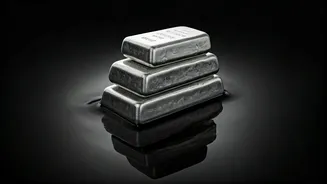

Silver Market Overview
The silver market, often viewed as a safe haven and a key industrial commodity, can be influenced by diverse factors. Silver's dual role as both a precious
metal and an industrial component makes its price sensitive to economic conditions, investor confidence, and supply-demand dynamics. For instance, the rise or fall in industrial demand directly impacts silver prices. Moreover, global economic uncertainties frequently drive investors towards safer assets, which also impacts the metal. The 20% drop in silver ETFs indicates a notable shift within the market. This change could stem from a combination of economic changes or investor sentiment shifts, highlighting the market's sensitivity.
ETF Performance Analysis
Exchange-Traded Funds (ETFs) that track silver are essential barometers for the market's health. The recent 20% drop in silver ETFs is significant. ETFs offer investors a straightforward way to invest in silver without directly purchasing the metal. This makes them highly sensitive to shifts in market confidence and trading activity. When ETF prices fall sharply, it generally means that investors are offloading their holdings. Factors affecting ETF performance include changes in investor expectations, trading volumes, and broader market sentiment. Examining the movements of these ETFs allows for an assessment of the current state of the market, offering clues about the drivers behind the price fluctuations.
Economic Factors Impact
Economic indicators play a crucial role in shaping the demand and price of silver. Economic slowdowns can curb industrial demand, as silver is used in manufacturing. Inflation rates influence investors' interest in silver as a hedge against currency devaluation. Interest rate decisions also affect the relative attractiveness of silver compared to other investment options, such as bonds. Changes in global economic policies can have a profound impact, whether through stimulus packages that increase inflation concerns, or shifts in the strength of the dollar that influence silver prices, which are often priced in USD. Monitoring these economic factors is crucial to understanding the factors driving the recent market downturn.
Investor Sentiment Influence
Investor sentiment is critical in the silver market. Fear and uncertainty can drive investors to safe-haven assets, such as gold and silver. Conversely, positive economic data might steer investors toward riskier assets, reducing interest in silver. The actions of large institutional investors and hedge funds significantly influence market trends. Increased buying activity by these entities can bolster prices, while widespread selling can amplify downward pressure. It’s also crucial to analyze the public’s perception of economic conditions and how it impacts their investment choices. Understanding the shifts in investor attitudes allows for a clearer comprehension of the dynamics contributing to the 20% ETF drop.
Supply and Demand Dynamics
The interplay between supply and demand is fundamental to price fluctuations in the silver market. Industrial demand for silver, particularly in electronics, solar panels, and medical equipment, is a major driver. Supply from mining operations and recycling efforts also affects market balance. Production disruptions, whether due to geological or geopolitical factors, can reduce supply, boosting prices. Conversely, increased mining output can put downward pressure on prices. Market analysts scrutinize these aspects to forecast price trends, as any imbalance can lead to significant price movements. The recent ETF drop may be related to changes in supply and demand, reflecting either a decrease in industrial demand or an increase in supply.
Geopolitical Impact Assessment
Geopolitical events can significantly influence the silver market. Political instability, trade disputes, and international conflicts can act as catalysts, triggering shifts in investor behavior. Heightened global tensions often lead to increased demand for safe-haven assets, which can support silver prices. Trade wars or the imposition of tariffs can disrupt supply chains and impact industrial demand. International sanctions and other political actions that affect key silver-producing countries can restrict supply. Analyzing these impacts is key to understanding the broad forces influencing market activity and provides context to the reasons behind the downturn. The current geopolitical climate might be playing a part in the fluctuations.
Market Outlook and Forecast
Predicting the silver market's future requires a thorough examination of its different components. The prospects depend on many different things, including global economic growth, industrial demand, investor sentiment, and geopolitical situations. Analysts employ various methods, from technical analysis to fundamental research, to generate insights. Economic projections and assessments of industrial sectors that rely on silver provide vital clues. Market analysts usually release periodic forecasts, offering insights into possible price movements. Staying informed about these perspectives and keeping an eye on changing market dynamics is essential for making well-informed investment choices.