






Personal Makeup Journeys
Palak Tiwari, reminiscing about her youth, recounted a time when she felt uninspired by makeup because the techniques used were tailored for her mother,
Shweta Tiwari, who possesses a softer facial structure. Palak noted that her own features are more pronounced, leading to a disconnect when the same application styles were used on her. She humorously mentioned sneaking her mother’s makeup products, often misplacing them from her school bag, as she began to experiment and develop her own understanding of what suited her. This personal exploration eventually led her to do her own makeup, realizing the importance of individual adaptation rather than a universal application strategy. The anecdote emphasizes that what looks good on one person might not translate effectively to another due to inherent differences in their appearance and how cosmetics interact with their specific characteristics.
Facial Features and Skin Types
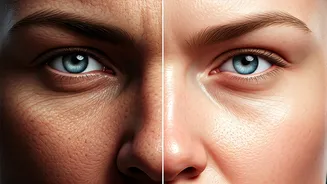
Dermatologist Dr. Shweta Nakhawa corroborates Palak's observations, asserting that makeup application is indeed highly individualized. She explains that distinct facial contours—such as prominent cheekbones, a strong jawline, or a broader forehead—significantly influence how makeup should be applied. Techniques like contouring, highlighting, and blush placement need to be adjusted to complement these unique structural elements. Similarly, eye shape, whether hooded, deep-set, or larger, dictates how eye makeup, including eyeliner and eyeshadow, should be styled to best accentuate the eyes without obscuring them. Beyond facial structure, skin type plays a crucial role. Whether skin is dry or oily dramatically affects how makeup appears and wears throughout the day. Therefore, understanding one's own facial characteristics and skin conditions is paramount for achieving a naturally enhanced look, rather than attempting to mask or alter one's features.
Finding Your Best Look
The key to successful makeup application lies in personal discovery and attentive observation. Dr. Nakhawa advises a process of trial and error, encouraging individuals to experiment and understand what textures and colors resonate best with their unique features and skin tone. Paying close attention to your specific skin type—whether it's dry, oily, or combination—and identifying your skin's undertone are essential steps. Using products that harmonize with these factors ensures makeup looks more natural and flattering. Moreover, consistent skincare is fundamental; removing makeup before sleeping and cleansing the face properly are non-negotiable habits. Refraining from sharing makeup products also helps maintain skin health. Ultimately, the goal of makeup is to enhance, not to disguise, celebrating individual beauty by working with, not against, one's natural features and skin condition.