






Constructive Proposals Exchanged
During the third round of indirect negotiations held in Geneva, Switzerland, Iranian and American delegates reportedly exchanged proposals deemed "very
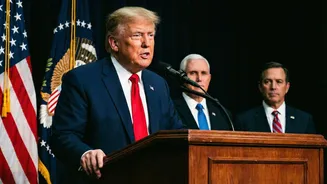
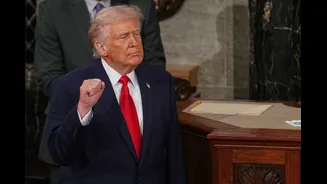
constructive." This dialogue occurred amidst a significant US military buildup in the Middle East, underscoring the urgency to prevent escalation. Iran's foreign ministry indicated following these discussions that a swift agreement with the United States was a tangible possibility. Ali Shamkhani, a key advisor to Iran's Supreme Leader, emphasized that an accord could be swiftly achieved if the negotiations exclusively centered on Iran's commitment to refrain from developing nuclear weapons. He asserted that such a focus would align with the Supreme Leader's religious edict and Iran's defense strategy, making an immediate agreement feasible. Shamkhani also conveyed that Iran's Foreign Minister possessed the necessary mandate and authority to finalize such a deal. This development followed statements by US President Donald Trump, who, during his State of the Union address, accused Iran of pursuing nuclear ambitions and developing missiles capable of threatening Europe and US bases, claims that Iran has consistently denied.
Openness and UN Involvement
The Geneva talks, hosted at the Omani ambassador's residence under heightened security, saw both US and Iranian delegations exhibiting "unprecedented openness" to novel and creative solutions, according to Oman, the mediator. The discussions, which UN nuclear chief Rafael Grossi also joined, were temporarily paused but slated to resume. Grossi reported that the delegations reviewed Iran's viewpoints and proposals, alongside the US team's responses and inquiries, concerning the fundamental aspects of Iran's nuclear program and the essential guarantees needed for a comprehensive agreement that covers all technical and monitoring dimensions. Prior to these sessions, Iranian President Masoud Pezeshkian reaffirmed that the Islamic Republic had no intention of pursuing nuclear weapons. Conversely, US Secretary of State Marco Rubio highlighted that Iran's reluctance to discuss its missile program constituted a significant obstacle, asserting that any negotiation must address these ballistic weapons.
Diplomatic Preference Highlighted
US Vice President JD Vance articulated that President Donald Trump continues to favor a diplomatic resolution with Iran and expressed hope that Iran would take these negotiations in Geneva seriously. Vance, speaking on Fox News, reiterated Trump's firm stance against Iran acquiring nuclear weapons, emphasizing a preference for achieving this objective through diplomatic channels, while also acknowledging the availability of other measures. He stressed the imperative of preventing the world's "craziest and worst regime" from obtaining nuclear capabilities. Vance also conveyed the Trump administration's hope for a peaceful resolution, but noted that the President retained the authority to use military force if necessary. In contrast, US Senator Lindsey Graham, a staunch ally of Trump, advocated for stricter measures, arguing against any uranium enrichment by Iran and expressing support for regime change, dismissing any consideration of allowing minimal enrichment for face-saving purposes.