








Cruise Ship Outbreak Unfolds
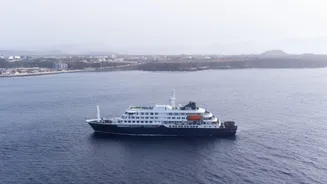
A significant hantavirus outbreak has occurred on the expedition vessel MV Hondius, which was sailing between Argentina and Cape Verde. As of the latest
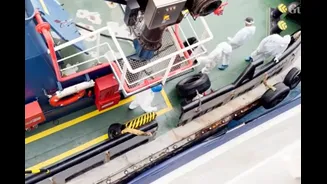
reports, three individuals have succumbed to the illness, and several others have been infected. The situation prompted an immediate response from South African health authorities, who confirmed the presence of the Andes strain of hantavirus. This particular strain is notable because it is the only known hantavirus variant capable of spreading directly from person to person, a circumstance described as "very rare" by Health Minister Aaron Motsoaledi. The outbreak has led to the evacuation of some passengers to South Africa for treatment and further investigation. Authorities are diligently working to identify and trace nearly 90 individuals who may have had contact with an infected passenger. This includes people on a commercial flight, at the airport, and within the hospital where the passenger received care, underscoring the urgent need to prevent any potential wider dissemination of the virus. The ship carried approximately 147 passengers and crew, with seven individuals falling ill out of this total. The swift action by health organizations like the World Health Organization (WHO) and national health departments highlights the seriousness with which such an event is being treated, despite the overall low risk to the general public.
Understanding Hantavirus Transmission
Hantaviruses are primarily zoonotic, meaning they are typically transmitted to humans through contact with infected rodents, most commonly via inhalation of aerosolized virus particles from their urine, droppings, or saliva. However, the Andes orthohantavirus, found predominantly in South America, presents a critical exception to this rule. Scientific studies and past outbreak investigations have demonstrated that this specific strain can, in limited instances, spread from person to person. This transmission usually occurs through sustained and close physical contact, such as that experienced between family members or caregivers. The potential for respiratory droplet spread or transmission via bodily fluids is also a consideration with the Andes strain. The World Health Organization's focus on the possibility of human-to-human spread in the cruise ship incident stems directly from the involvement of this unique viral variant. This distinction is vital for public health responses, as containment strategies for typical hantavirus infections rely heavily on environmental controls to minimize rodent exposure. If human-to-human transmission is confirmed, more intensive measures like strict isolation protocols, extensive contact tracing, and enhanced surveillance in enclosed environments become paramount.
Assessing Wider Spread Risks
Despite the confirmed fatalities and the alarming possibility of human-to-human transmission, health experts are emphasizing that the overall risk to the general population remains low. This assessment is based on several key factors. Firstly, human-to-human transmission of hantavirus, even with strains like Andes, is exceptionally uncommon. Such transmission generally necessitates prolonged and intimate close contact, making casual or brief interactions unlikely to result in infection. Furthermore, there is currently no evidence to suggest sustained community transmission of the virus. Even in previous outbreaks involving the Andes virus in South America, the chains of transmission have typically been confined and self-limiting, not escalating into widespread epidemics. The controlled environment of a cruise ship, while potentially amplifying visibility of rare transmission events due to close proximity, also allows for focused containment efforts by health authorities once an outbreak is identified. These factors contribute to the reassurance that a broad public health crisis from this specific incident is improbable, though vigilance and continued monitoring are essential.
Symptoms and Severity
Hantavirus infections can manifest with a range of symptoms, and in severe cases, they can be life-threatening. The most critical form is known as Hantavirus Pulmonary Syndrome (HPS), which can progress with alarming speed. Initial symptoms often resemble a common flu, including fever, fatigue, muscle aches, headache, and dizziness. However, as the disease advances, it leads to severe respiratory distress, progressing to respiratory failure if not promptly and adequately managed. The mortality rate for individuals experiencing severe HPS can be as high as 40%, underscoring the critical importance of early detection and immediate supportive medical care. As of May 4, 2026, the outbreak on the MV Hondius had resulted in seven reported cases—two laboratory-confirmed and five suspected—with three fatalities. The World Health Organization, through its Director-General Tedros Adhanom Ghebreyesus, has assessed the risk to the global population as low, while committing to ongoing monitoring of the situation. This highlights the dual nature of hantavirus: potentially devastating in severe cases but with a limited overall transmission risk.
Cruise Ships and Health Risks
The current hantavirus outbreak on the MV Hondius has brought renewed attention to the unique vulnerabilities of cruise ships concerning the spread of infectious diseases. These maritime environments are particularly susceptible due to several inherent characteristics. The high density of passengers and crew in shared indoor spaces significantly increases the potential for pathogen transmission. Shared ventilation systems can also facilitate the circulation of airborne contaminants. Furthermore, the isolated nature of a cruise ship often means limited access to advanced medical facilities compared to land-based locations, complicating the management of serious illnesses. This was notably observed during the COVID-19 pandemic, where similar conditions on cruise ships led to rapid and extensive outbreaks. The hantavirus incident illustrates how, even with a rare transmission pathway, the close-quarters environment of a cruise ship can make such events more apparent and challenging to control, necessitating robust onboard health protocols and swift external medical support when necessary.
Public Health Implications
The recent update from the WHO regarding the hantavirus outbreak carries significant implications for the broader field of public health and emerging infectious disease management. A key takeaway is the dynamic nature of zoonotic viruses, which can potentially evolve and acquire new modes of transmission over time. This underscores the necessity for continuous monitoring of seemingly rare events, such as person-to-person spread, as they can offer critical insights into viral adaptation. The incident reinforces the fundamental importance of rapid response systems and effective global coordination in addressing health threats, regardless of their perceived rarity or scale. Moreover, the outbreak highlights the value of the "One Health" approach, an integrated strategy that recognizes the interconnectedness of human, animal, and environmental health. By adopting this holistic perspective, public health officials can better anticipate, predict, and prevent future outbreaks by understanding the complex interplay of factors that contribute to disease emergence. This hantavirus situation serves as a potent reminder that vigilance, research, and international cooperation are essential in navigating the evolving landscape of infectious diseases.