





Sooji: A Quick Intro
Sooji, also known as semolina, is a coarsely ground wheat product, frequently employed in South Asian cuisine. Its versatility allows for diverse culinary
applications, proving to be a quick and adaptable ingredient. It is a staple ingredient for many breakfasts and snacks because of its quick cooking time and ability to absorb flavors effectively. Sooji dishes often involve simple preparation methods, making them suitable for busy mornings. Its neutral flavor profile enables it to pair well with a wide range of spices, vegetables, and other ingredients, offering endless possibilities for culinary creativity. From the traditional upma to innovative desserts, sooji remains a beloved choice for its taste and convenience.
Upma: The Classic Choice
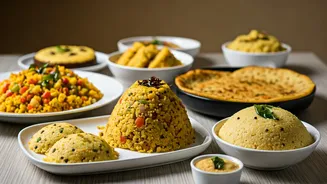
Upma stands as the quintessential sooji dish, a breakfast staple across India. Typically, the sooji is dry-roasted to enhance its flavor, followed by tempering with mustard seeds, curry leaves, and a selection of vegetables. The roasted sooji is then combined with water, allowing it to cook and absorb the flavors of the spices and vegetables. This process results in a textured dish with a comforting consistency. Variations abound across regions, with adjustments to vegetables like onions, tomatoes, and peas, and the addition of nuts and spices, reflecting regional preferences and tastes. The dish's ease of preparation, speed, and flavor make upma a beloved dish that caters to a diverse range of palates, solidifying its place in Indian cuisine.
Sooji Halwa: Sweet Delight
Sooji halwa is a sweet indulgence that begins with the dry roasting of sooji until golden and fragrant. It is simmered in ghee with sugar and water until the mixture thickens, creating a soft, dessert-like consistency. The dish is often flavored with cardamom and garnished with nuts like cashews and raisins. The ghee enriches the flavor, while the sugar provides sweetness, balancing the other elements. The halwa's texture is both soft and slightly grainy, offering a delightful mouthfeel. Commonly served at celebrations and religious ceremonies, the dish's straightforward recipe and satisfying taste have secured its spot as a cherished dessert across many cultures and homes, cherished for its comforting appeal.
Sooji Dosa: Crispy Treat
Sooji dosa provides a crispy, savory experience, using a batter primarily composed of sooji. The batter might incorporate rice flour and spices, imparting flavor and ensuring the desired texture. These dosas are made by spreading the batter thinly on a hot griddle. As it cooks, it forms a thin, crispy layer. The dosa's texture is often compared to a crepe. Sooji dosas are a welcome alternative to regular dosas. They are often served with chutneys and sambar, making them a fulfilling meal. This quick and easy version of the traditional dosa offers a delightful textural contrast and an easy way to enjoy the classic breakfast.
Sooji Idli: Fluffy Bites
Sooji idli, a softer variation of the traditional idli, substitutes sooji for the usual rice and lentil batter. The sooji is mixed with yogurt, water, and spices before being steamed. This steaming process creates fluffy, light idlis that offer a different mouthfeel than the regular kind. The yogurt helps in fermentation, contributing to their softness and slight tanginess. Sooji idlis are often served with sambar and chutney. They present a quicker way to enjoy idlis. Their adaptability makes them a family favorite for breakfast.
Sooji Uttapam: Savory Pancake
Sooji uttapam is a thick, pancake-like dish prepared from a fermented batter of sooji. The batter is combined with spices and vegetables such as onions, tomatoes, and green chilies. The batter is poured onto a griddle and cooked until both sides are golden and the vegetables are softened. The uttapam's texture is soft yet slightly firm, offering a satisfying bite. It is often served with coconut chutney and sambar. This variation provides a delightful way to enjoy a wholesome and flavorful breakfast, with the vegetables adding both texture and taste, making it a complete meal.
Sooji Pancakes: Simple Pleasure
Sooji pancakes are a straightforward breakfast option where sooji forms the base of the batter, alongside other ingredients such as milk, eggs, and sugar. The batter is poured onto a hot griddle, and cooked until they turn golden. They're often enjoyed with maple syrup, honey, or fresh fruit. These pancakes have a lighter texture compared to pancakes made with all-purpose flour. Sooji pancakes offer a good balance between ease of preparation and taste, providing a satisfying and quick start to the day. Their simplicity makes them a perfect choice for those in a hurry but still desiring a delicious breakfast.
Sooji Cutlets: Crispy Snacks
Sooji cutlets offer a savory, snack-like alternative, utilizing sooji mixed with boiled potatoes, spices, and herbs. The mixture is shaped into patties and pan-fried or shallow-fried until golden and crispy. These cutlets are great with chutneys or tomato ketchup. The crisp exterior and soft interior provide a pleasing combination of textures. Sooji cutlets are a quick way to serve something tasty and provide a hearty breakfast, showcasing the versatility of sooji beyond traditional dishes. They are perfect for those wanting a change from the usual breakfast.
Sooji Kheer: Creamy Dessert
Sooji kheer is a creamy, sweet dessert similar to rice kheer, where sooji is cooked in milk with sugar, cardamom, and nuts. The kheer is simmered until it thickens, resulting in a rich and comforting texture. The cardamom and nuts enhance the flavor profile, and the kheer can be served hot or cold. This version provides a delightful alternative to rice kheer and shows the versatility of sooji as an ingredient. It's often enjoyed as a dessert, but can also serve as a sweet start to the day. Sooji kheer brings a sweet end to a meal, or a delicious and rich breakfast.
Sooji Poha: Fluffy Delight
Sooji poha represents a twist on the traditional poha, with sooji taking the place of flattened rice. The sooji is cooked with onions, mustard seeds, curry leaves, and spices, much like the original recipe. This creates a fluffy, flavorful dish. This dish is often garnished with coriander and lemon juice. The dish is quick to prepare and easy to customize with different vegetables and spices. Sooji poha gives a fresh take on a breakfast staple, proving sooji’s adaptability and its deliciousness in various forms. It presents a quick and satisfying option for those seeking a change from regular breakfast.