






Case Timeline
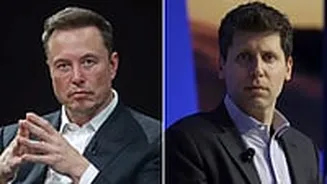
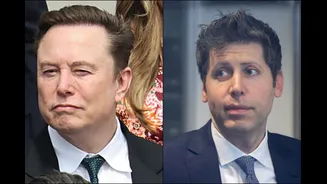
The legal battle initiated by Elon Musk against OpenAI and its chief executive, Sam Altman, has concluded with a jury's decision that the claims were brought
forth too late. This verdict was delivered by a jury in a federal court located in Oakland, California. The trial itself commenced on April 28, culminating after an extended period of proceedings. The jury’s unanimous decision emphasized the untimely nature of Musk’s legal action as the primary reason for its dismissal, rather than adjudicating the merits of the alleged mission deviation. This procedural ruling effectively ended Musk's pursuit of his allegations against the AI organization.
Musk's Allegations
At the heart of Elon Musk's lawsuit was an accusation that Sam Altman had fundamentally altered OpenAI's original purpose. Musk contended that by transitioning the artificial intelligence company, known for developing ChatGPT, into a for-profit entity, Altman had violated a non-profit contract. Musk's argument was rooted in his assertion that he had contributed $38 million to the organization based on its initial charitable mission to develop AI for the betterment of humanity. He felt that accepting this charitable donation and subsequently shifting the company's structure constituted a betrayal of that original agreement, suggesting an alleged manipulation for personal gain rather than altruistic advancement.
Jury's Verdict Rationale
Following eleven days of testimonies and arguments that put the credibility of both Musk and Altman under scrutiny, the jury reached a decisive verdict. The nine-person jury determined that the lawsuit had not been filed within the legally permissible timeframe, citing the statute of limitations as the overriding factor. This meant that the core claims of betrayal and mismanagement of funds were not even addressed on their substance. The jury’s focus remained on the procedural aspect of the case, concluding that Musk had waited too long to formally bring his grievances to court, thereby forfeiting his right to pursue the case further on these grounds.
OpenAI's Defense
In their defense, representatives for OpenAI, a company now valued in excess of $850 billion, argued that there was never an explicit commitment to maintain a non-profit status indefinitely. They posited that Musk was aware of this nuanced understanding when he initiated the lawsuit, suggesting his legal challenge stemmed from his inability to retain unilateral control over the company's direction. This perspective framed Musk's action not as a defense of humanity's benefit, but as a reaction to losing influence and control over a burgeoning technology company that had evolved significantly since its inception. OpenAI maintained that its trajectory was a natural progression and not a violation of any binding agreement.