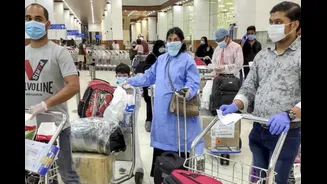









No Cause for Panic
Dr. N.K. Arora, President of AIIMS Bilaspur, has addressed public concerns stemming from the Ebola outbreak in eastern Congo's Ituri province, which has resulted
in nearly 100 fatalities. He firmly stated that there is absolutely no reason for panic in India, explaining that the Ebola virus does not spread with extreme rapidity. However, he underscored the necessity for vigilance, especially given the significant human mobility and travel between countries. The concern arises from the potential for the virus to reach geographical areas where it isn't currently circulating, necessitating careful monitoring of individuals traveling from affected regions. Dr. Arora highlighted that the disease, while serious, is manageable with proper precautions and awareness, and India's existing health infrastructure is well-equipped to handle any potential, though unlikely, introduction of the virus.
India's One Health Mission
India is proactively strengthening its defense against potential viral threats through its 'One Health' mission, a sophisticated surveillance system designed to detect when pathogens jump from animals to humans. Dr. Arora elaborated on this innovative approach, explaining its critical role in early detection and response. This mission focuses on monitoring the complex interactions between human, animal, and environmental health, recognizing that many emerging infectious diseases originate in animal populations. By establishing these robust surveillance networks, India aims to identify and track potential zoonotic transmissions, allowing for swift intervention before an outbreak can take hold. The AIIMS Bilaspur Chief emphasized that continuous effort and investment in this system are paramount to ensuring national health security and maintaining India's preparedness against future public health emergencies.
Understanding the BDB Strain
The current Ebola outbreak is driven by the BDB (Bundibugyo ebolavirus) strain, which presents a significant challenge due to the absence of a specific vaccine. Dr. Arora clarified that this strain differs from previous ones, like the Zaire Ebola virus, and unfortunately, existing vaccines are ineffective against it. The mortality rate associated with the BDB strain is notably high, ranging between 30% and 50%, making preventive actions and supportive care for infected individuals the primary strategies. Unlike some other Ebola strains that had higher mortality rates, the BDB strain, while still dangerous, exhibits a slightly lower fatality percentage. The lack of targeted therapeutic options further underscores the importance of stringent containment measures and vigilant monitoring of the outbreak in affected regions like Uganda and the Democratic Republic of Congo.
Transmission and Origin Insights
Ebola's transmission dynamics are complex, with the virus spreading from symptomatic individuals. The incubation period can range from two days to 21 days, meaning infected individuals may not show symptoms for a considerable time, complicating detection. While the exact primary reservoir is still under investigation, fruit bats are suspected to be the original hosts, similar to coronaviruses. Monkeys often act as intermediate hosts, contracting the virus from bats and then potentially transmitting it to humans. A crucial indicator of an outbreak is often the unexplained death of monkeys in an area. The disease's spread from animals to humans and subsequently human-to-human transforms it into a challenging zoonotic disorder. Understanding these pathways is vital for developing effective control strategies and preventing spillover events.