

An Orbiting Eyewitness
From the unique vantage point of the International Space Station (ISS), astronauts have the privilege of observing Earth and its surroundings in ways few
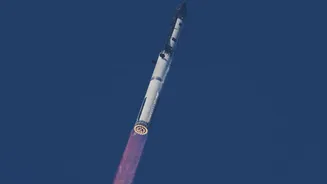
can imagine. Recently, this extraordinary perspective led to the capture of a truly mesmerizing event. Astronaut Chris Williams, while using the Cupola module on April 27th around 10:40 PM GMT, witnessed something remarkable. Initially, he was scanning the skies, anticipating the arrival of the Progress MS-34 cargo resupply vessel. However, as the ISS passed over West Africa, his attention was drawn to an unexpected phenomenon directly below. A brilliant fireball appeared to tear through the upper layers of our atmosphere, leaving behind a luminous, extended trail. This fiery spectacle captivated him, especially as it fragmented into a cascade of smaller pieces, creating what he described as a "light show" from orbit.
Unraveling the Phenomenon
The breathtaking footage shared by NASA sparked immediate public fascination, with viewers likening the streaking object to characters from popular culture and labeling it 'epic.' While the initial thought might be human-made debris, NASA clarified that the observed event was not related to the Progress MS-34 cargo ship, which docked without issue. Scientists at NASA's Crew Earth Observations office suggest that the astronaut likely observed the fiery reentry and subsequent breakup of a rocket body, possibly the one used to launch the resupply vessel, or another piece of orbital debris like a defunct satellite. Pinpointing the exact source remains challenging without precise directional data from the handheld camera's aim. Another plausible explanation offered by NASA is that the brilliant display could have been caused by natural meteoric material encountering Earth's atmosphere and burning up.
Space Debris: A Common Sight
For those aboard the International Space Station, witnessing objects reenter Earth's atmosphere is not an uncommon, though always spectacular, occurrence. NASA's Orbital Debris Program Office indicates that a significant portion of the large debris found in orbit originates from the fragmentation of satellites and the rocket stages used to launch them. This material tends to be concentrated within approximately 2,000 kilometers of Earth's surface and travels at incredible speeds, often around 25,000 kilometers per hour. The controlled reentry and disintegration of space junk are often a planned aspect of satellite operations. Many contemporary satellites are engineered to burn up completely upon reentering the atmosphere, a crucial design feature aimed at preventing any fragments from reaching populated landmasses. For larger objects, space agencies actively track their trajectories to predict potential landing zones, with oceanic regions serving as the most common and safest targets.