





A Culinary Introduction
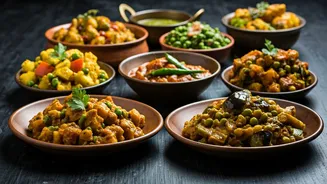
Bengali cuisine, known for its subtle and complex flavors, is a significant part of India's culinary landscape. It beautifully blends sweet, sour, and spicy
elements, often using fresh, seasonal ingredients. The use of fish, rice, and lentils is prominent, along with a variety of spices that create its unique taste. Furthermore, Bengali food is not just about taste; it is also deeply rooted in the culture and history of the region. Dishes often reflect festivals, traditions, and the availability of local produce. Each meal tells a story, and the way it is prepared and served is a testament to Bengali hospitality and the appreciation for food as an art form. The diverse range of dishes reflects the culinary influence of various communities over centuries.
Machher Jhol: Fish Curry
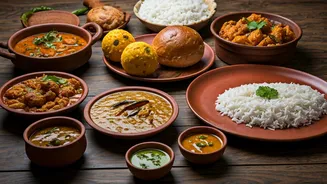
Machher Jhol, or fish curry, is a staple of Bengali cuisine and features prominently in everyday meals. The preparation typically involves cooking fish (often river fish like rohu or katla) in a light broth made with onions, tomatoes, and a mix of spices such as turmeric, cumin, coriander, and chili powder. The simplicity of the dish highlights the freshness of the fish and the balance of the spices. The dish is usually served with rice and reflects the Bengali preference for simple, home-style cooking. The choice of fish and spices often varies regionally, showcasing the versatility of the dish. Moreover, Machher Jhol is not just a dish; it's an experience, bringing families together.
Shorshe Ilish: Hilsa Delight
Shorshe Ilish, a delicacy, is a dish that highlights the beloved Hilsa fish, a seasonal favorite in Bengal. The fish is cooked in a mustard-based gravy, infusing it with a pungent yet aromatic flavor. The mustard paste is blended with green chilies and other spices, creating a balanced, flavorful sauce. This dish is usually made during the monsoon season when Hilsa is plentiful. The way the fish is prepared and its unique taste make it a highlight of Bengali celebrations and festive meals. The preparation of Shorshe Ilish is a testament to Bengali culinary expertise, which enhances the natural taste of the fish.
Aloo Posto: Poppy Seeds
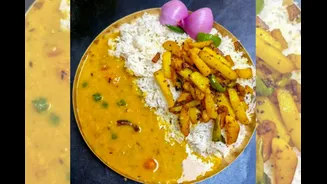
Aloo Posto is a vegetarian side dish that showcases the unique flavors of Bengali cooking. It involves potatoes cooked with poppy seeds, which are ground into a paste, creating a creamy and slightly nutty flavor. The dish is seasoned with green chilies and sometimes turmeric, offering a simple yet satisfying taste. This dish is a standard side at many Bengali meals and complements the fish and meat dishes. The simplicity of Aloo Posto highlights the Bengali ability to create delicious dishes using basic ingredients, and it is a popular item among both vegetarians and non-vegetarians. The creamy texture and mild flavor make it a perfect pairing for rice.
Kosha Mangsho: Meat Curry
Kosha Mangsho, a rich and flavorful mutton curry, is a special-occasion dish for Bengalis. The meat is slow-cooked with a blend of onions, ginger, garlic, and a mix of spices, which creates a thick, aromatic gravy. The slow-cooking process tenderizes the meat, allowing the flavors to meld beautifully. Kosha Mangsho is often cooked for hours until the meat becomes tender. Served with rice or paratha, it is a hearty and satisfying meal. The preparation of Kosha Mangsho is a labor of love, representing the Bengali love for food and their desire to create the best flavor.
Luchi & Cholar Dal
Luchi is a deep-fried, puffed-up flatbread, typically eaten for breakfast or as a snack. It's often paired with Cholar Dal, a flavorful lentil dish, which consists of chickpeas cooked with coconut, ginger, and spices. The sweetness of the Cholar Dal complements the subtle taste of the Luchi. This combo is a popular choice for festive meals. The combination of Luchi and Cholar Dal is more than just food; it is a cultural tradition that brings people together. This combination represents the Bengali culinary expertise in creating satisfying and memorable meals.
Mishti Doi: Sweet Yogurt
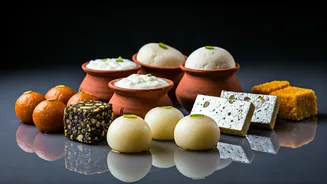
Mishti Doi, a sweet yogurt, is a beloved dessert that concludes almost every Bengali meal. It is made by slow-cooking milk with sugar until it thickens and then allowing it to ferment, giving it a unique creamy texture and a caramelized taste. The process can take several hours, but the result is a delightful dessert that perfectly balances sweetness with a tangy touch. It is typically served in earthen pots. Mishti Doi symbolizes Bengali love for sweets and their ability to create simple yet delicious treats. The cultural significance of Mishti Doi is immense.
Rasgulla: Sweet Balls
Rasgulla, a soft, spongy, and syrupy sweet, is one of Bengal's most famous desserts. These cheese balls are cooked in sugar syrup, absorbing the sweetness and creating a melt-in-your-mouth experience. Rasgulla, born from the creative Bengali minds, has gained popularity across India and globally. This dessert perfectly displays the Bengali love for sweets. The delicate balance of flavors and textures in Rasgulla is a testament to Bengali culinary skill. It is an integral part of Bengali celebrations and is known for its delicious taste.
Sandesh: Milk Sweet
Sandesh is another popular Bengali sweet made from milk solids and sugar. It is available in various forms and flavors, including varieties with cardamom, saffron, and nuts. This sweet reflects the diversity of Bengali dessert culture. The delicate taste of Sandesh is another classic dessert. The preparation of Sandesh reflects the Bengali art of creating sweets with simple ingredients. Its versatility in flavors makes it a favorite at various occasions. Sandesh represents the sweet side of Bengali culture.
Prawn Malai Curry
Prawn Malai Curry showcases the Bengali love for seafood. The prawns are cooked in a creamy coconut milk-based gravy with spices such as ginger, garlic, and chili. The creamy, rich sauce beautifully complements the tender prawns. This dish is usually served with rice and is often a highlight of special occasions and dinner gatherings. It highlights the Bengali talent for creating flavorful dishes with diverse influences. Prawn Malai Curry, with its blend of flavors, is a representation of the Bengali culinary tradition.